
Last updated September 10, 2026
Full 25-point door and opener safety check with every visit - springs, cables, rollers, tracks, and your LiftMaster or Chamberlain opener included
You get a price before we start. It does not change when the truck arrives.


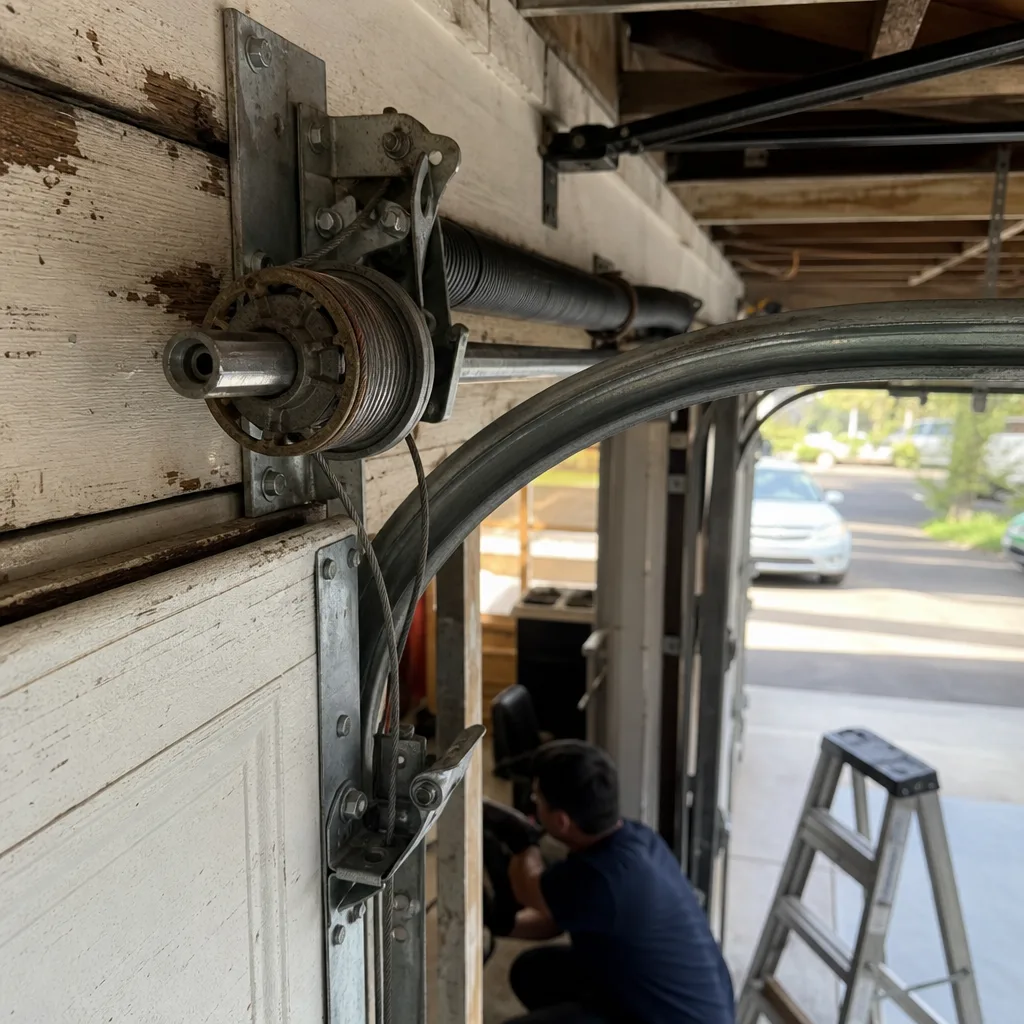 Before
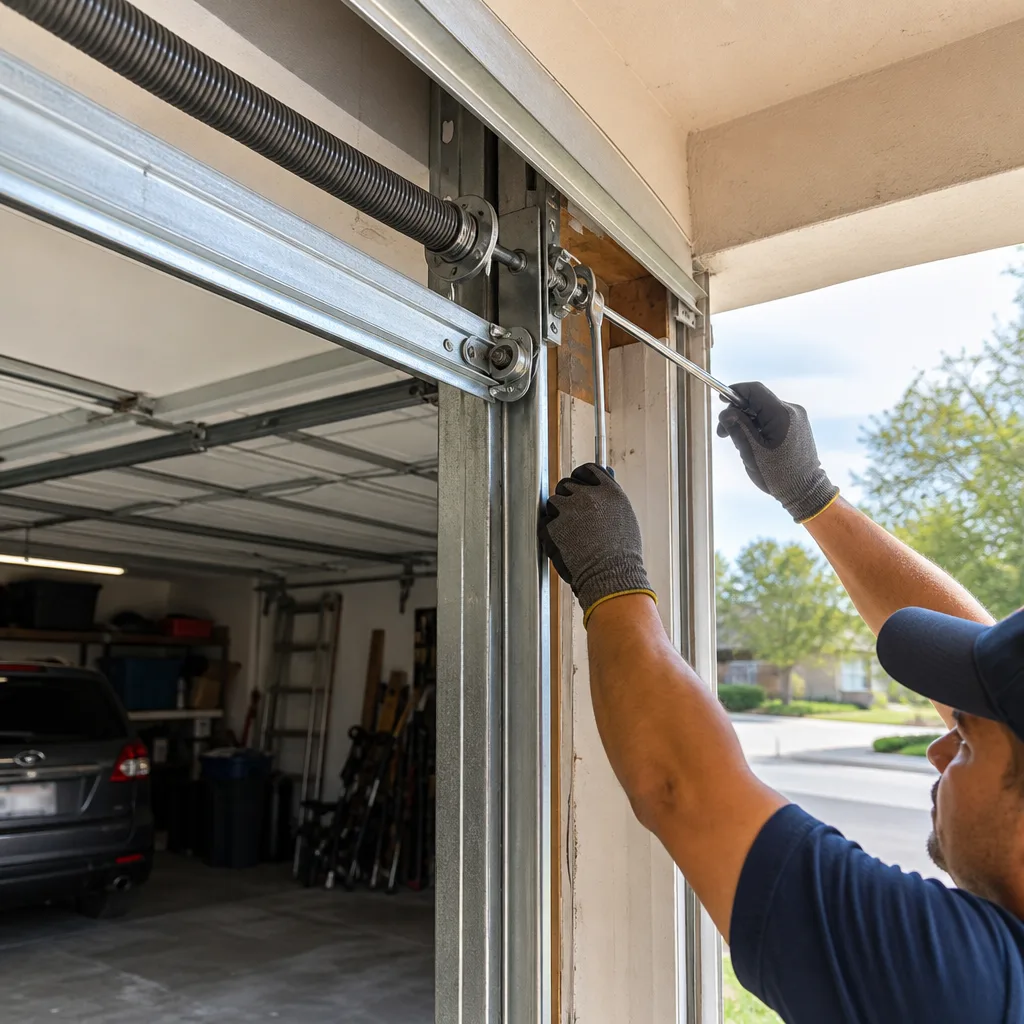 After
After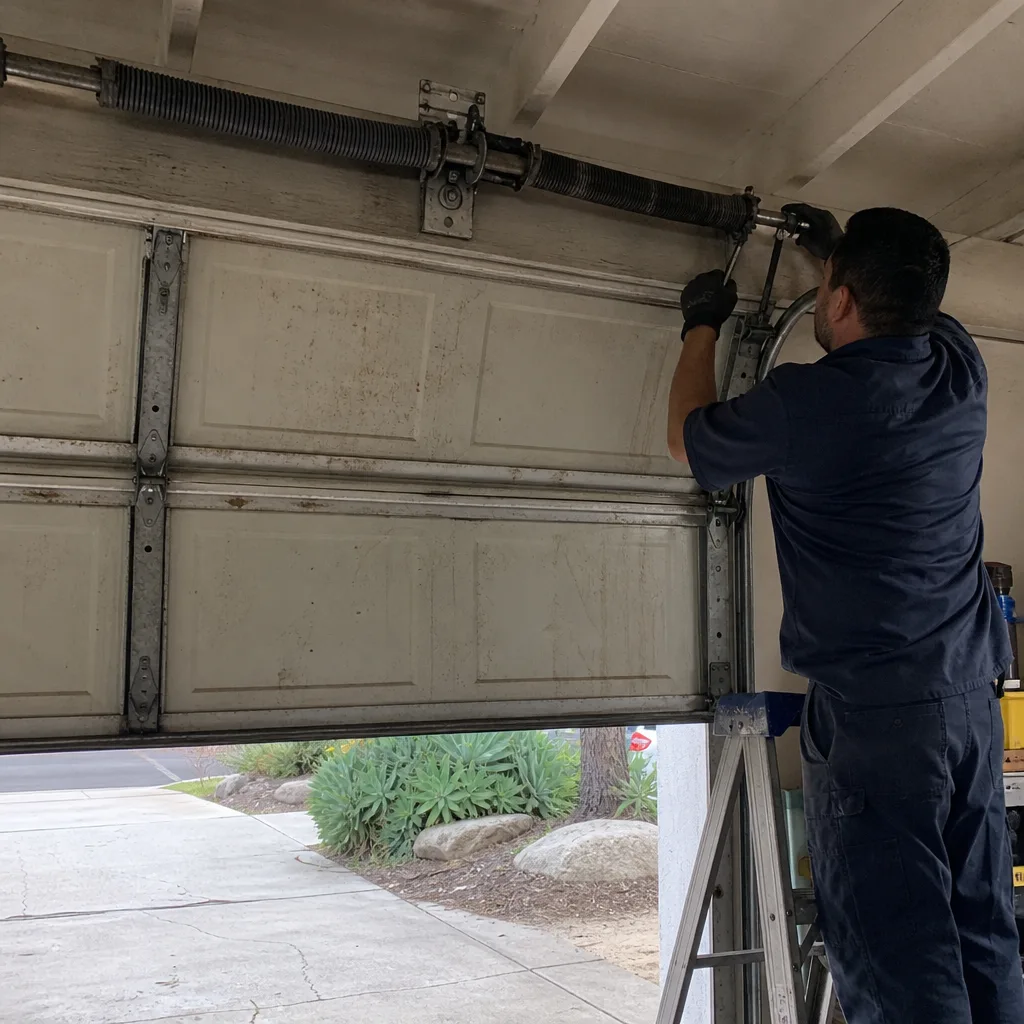 Before
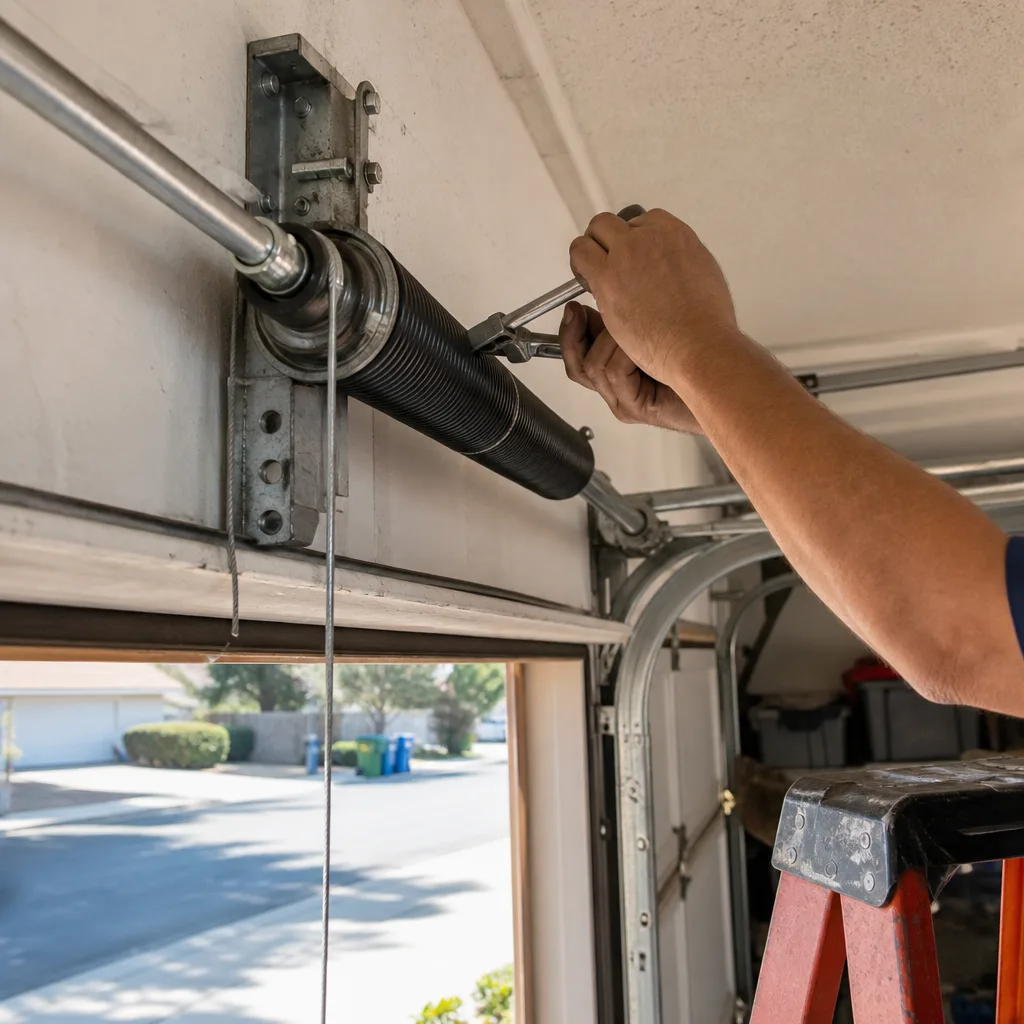 After
After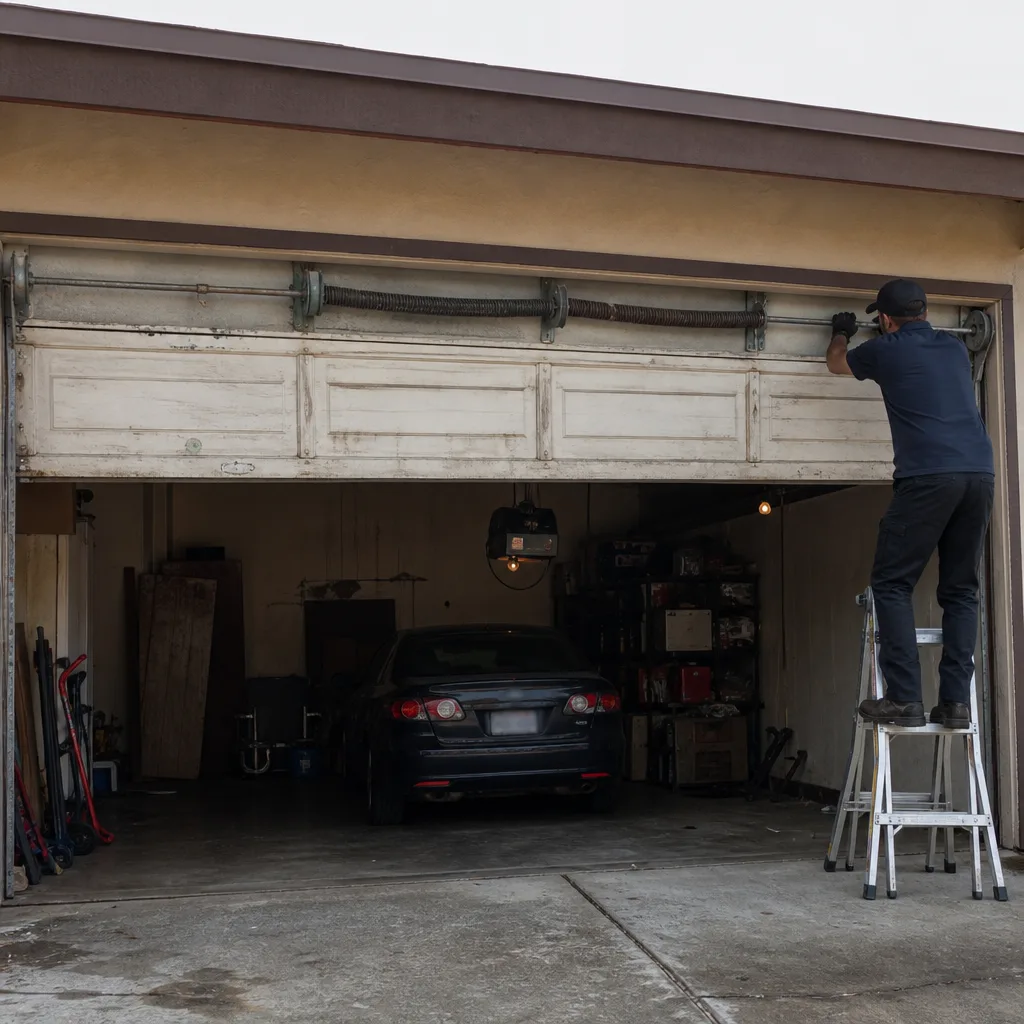 Before
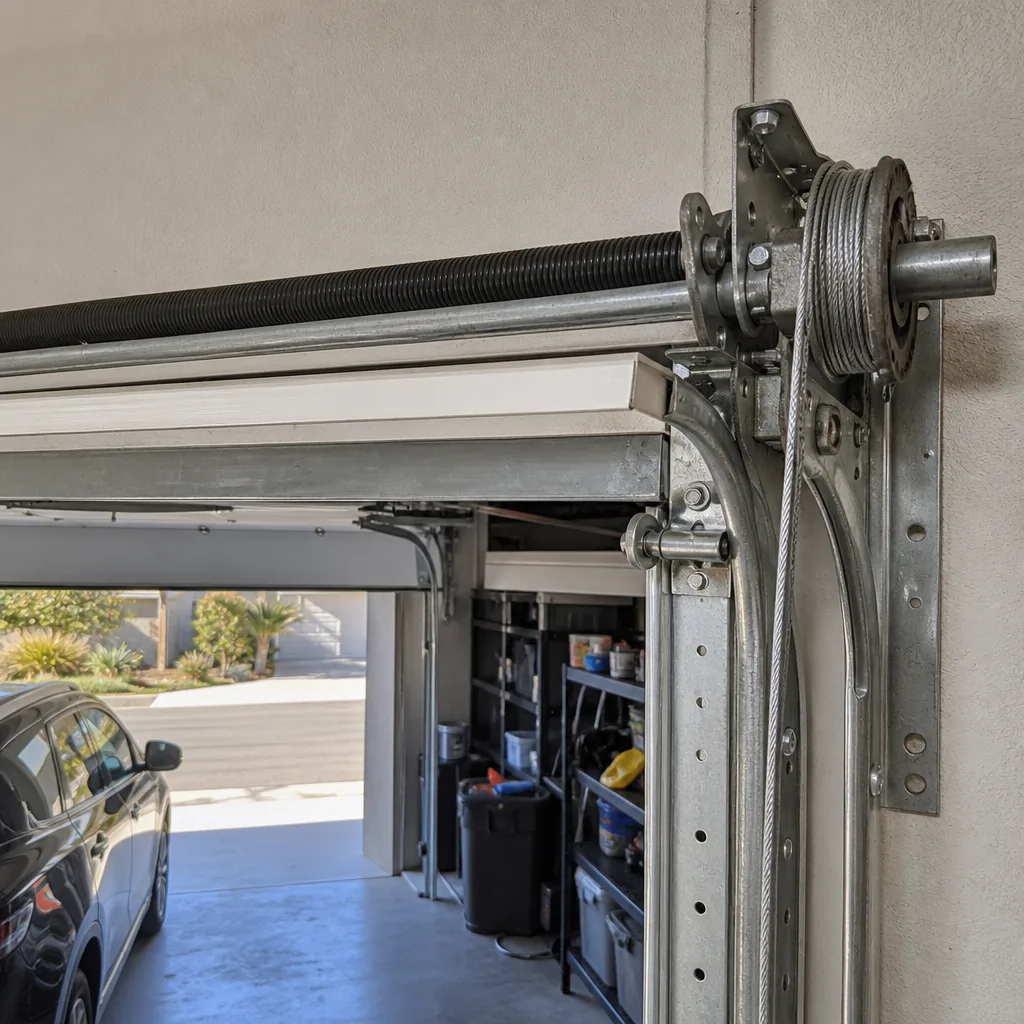 After
AfterHow to Hire a Garage Door Contractor in Poway: A Step-by-Step Guide
Here’s something most Poway homeowners never learn until it’s too late: the name painted on the side of the truck and the name on the contractor’s license are two completely different things more often than you’d think. In California, you can check that discrepancy in about 45 seconds on the CSLB website, and almost nobody does it before handing over a deposit. This guide - and our Complete Guide to Garage Door in Poway - walks you through exactly how to separate the local owner who will answer your call in five years from the franchise placeholder who won’t even remember your street name. You’ll learn what to verify, which questions make a lowball quote fall apart, and how to read a warranty like someone who’s fixed garage doors in Poway since 2004.
Quick Answer
To hire a garage door contractor in Poway, verify their California CSLB license and bond at cslb.ca.gov, get a written itemized quote with labor, hardware, and haul-away listed separately, ask whether the person quoting is the person doing the work, and insist on a written warranty that names specific parts and timeframes instead of vague “lifetime” language. The whole verification process takes under ten minutes and eliminates the contractors most likely to overcharge, underbuild, or vanish. Call Otto’s Garage Door at (858) 330-1549 for a free estimate you can compare against any other bid.
Table of Contents
- Step 1: Run the CSLB License Lookup Before You Call Anyone
- Step 2: Figure Out Who’s Actually Showing Up - Franchise or Local
- Step 3: Get a Written Quote That Can’t Hide Add-Ons
- Step 4: Read the Warranty Like a Mechanic, Not a Tourist
- Step 5: Understand Why the Cheapest Bid Costs the Most
- Step 6: Call and Ask the Three Questions That Expose Everything
- What Poway’s Climate Does to Your Door (And Why It Matters When Hiring)
- Common Mistakes to Avoid
- When to Call a Professional
- Frequently Asked Questions
- The Bottom Line
Step 1: Run the CSLB License Lookup Before You Call Anyone
Every legitimate garage door contractor in California carries a license issued by the Contractors State License Board, and every one of them expects you to check it. The lookup takes less than a minute. Go to cslb.ca.gov, click “Check a Contractor’s License,” and type in either the license number or the exact business name. What comes back tells you more than any Yelp review.
Here’s what you’re looking at, in plain English:
- License status: It must say “Active.” “Suspended,” “Expired,” or “Revoked” means walk away, no matter how good the price sounds. A suspended license usually means unpaid judgments, failed bonds, or unresolved complaints.
- License class: Garage door work falls under C-61/D-28 (Door and Gate) or a related specialty class. A general building contractor (Class B) can legally do it, but a specialty license means this is all they do, which is what you want when 200 pounds of door is riding on two springs.
- Bond status: California requires contractors to carry a $25,000 contractor’s bond. The CSLB page shows whether it’s current. An expired bond means the contractor can’t legally work, period.
- Workers’ comp insurance: If they have employees and no workers’ comp, you could be liable if someone gets hurt on your property. The CSLB shows this too.
- Complaint history: This is the part most homeowners skip. The CSLB lists legal actions, arbitration awards, and license suspensions. Three complaints about the same pattern - usually lowball quotes that balloon at the door - tells you everything a five-star review never will.
In our experience in Poway, roughly one in four calls we get starts with a homeowner describing a contractor whose license didn’t match the name on the advertising. They found out too late. The CSLB lookup would have caught it in the time it takes to make a cup of coffee.
If you want to see what a clean license profile looks like, check any contractor you’re considering against Otto’s Garage Door - the license number is published right on the website, the address is real, and the owner answers the phone. That’s the standard you’re comparing against.
Step 2: Figure Out Who’s Actually Showing Up - Franchise or Local
The national brand names in the garage door industry sound reassuring until you understand the model. Many of them operate through independent franchisees who rent the name, the uniforms, and the marketing. The person who shows up at your Poway door may be a subcontractor who’s never attended a company training, doesn’t carry the company’s bond, and has no long-term stake in your satisfaction. The franchise gets a cut of every job; the actual work quality depends on whoever happened to pick up the dispatch.
Here’s how to tell the difference before you book:
- Ask who owns the business. A local owner says “me” and gives you a name. A franchise employee says “the company” and gives you a territory.
- Ask who’s doing the work. If the person quoting isn’t the person installing, ask how the installer was trained, who they actually work for, and whether they’re an employee or a subcontractor.
- Ask where the address is. A Poway business has a Poway address, or close to it. A call center three states away doesn’t. The CSLB lookup shows the business address tied to the license, and it’s public information.
- Ask who answers the phone at 9 p.m. With a local owner, it’s often the owner. With a franchise, it’s an answering service reading from a script.
This matters more in Poway than it might somewhere else. Our housing stock leans older - a lot of homes in the Green Valley and Old Poway areas went up in the 1970s and 1980s, which means original doors and openers hitting the end of their useful life. When a spring lets go on a Saturday night and your car is sealed inside the garage, you want to reach someone who knows Poway, not an intake form.
The name on the van is the name on the invoice and the name on the license. That phrase describes exactly what local ownership means, and it’s the minimum standard you should accept. Otto’s Garage Door has been locally owned and owner-operated since 2004, and Otto Reinhardt is the person who quotes the job and the person who stands behind it.
Step 3: Get a Written Quote That Can’t Hide Add-Ons
The most common complaint we hear about garage door contractors isn’t bad workmanship. It’s the price changing between the phone call and the driveway. A quote that’s “about $300” on the phone becomes $600 when labor, hardware, and haul-away appear as line items at the door. Here’s how you make that impossible.
Get everything in writing before you schedule. The quote should list:
- Parts: The exact spring, opener, panel, or door being installed, with brand and model number. “Replacement spring” is not a quote. “LiftMaster torsion spring, 2-inch, 24,000 cycles” is a quote.
- Labor: The total labor cost, not an hourly rate with an open-ended number of hours.
- Hardware: Every bracket, bearing, cable, and roller included, or explicitly excluded.
- Haul-away: What happens to the old door, springs, and opener. Some contractors charge $75-$150 to haul away the old door and don’t mention it until the truck is in your driveway.
- Warranty terms: Written, with coverage periods for each component, not a verbal “don’t worry, we’ll take care of you.”
- Total price: The price you will pay, in full, before the work starts. Not an estimate, not a range, not “based on conditions.”
- “Is this the final price, including tax, haul-away, and all hardware?” If they hesitate, get it in writing.
- “Is there any scenario where this price changes once you see the door?” A good contractor will say no, or will define the scenario precisely before they arrive.
- “Who do I call if I have a problem with this work in six months?” If the answer is a 1-800 number, you’re not hiring a local contractor. You’re hiring a scheduling service.
- Springs: Springs are rated in cycles - one cycle is one open and one close. A standard spring from the hardware store might be rated for 10,000 cycles, which is about three to five years of normal use. A high-cycle spring from a brand like Raynor or a shop that stocks commercial-grade hardware might be rated for 25,000 to 50,000 cycles, which is a decade or more. The warranty should specify the cycle rating, which tells you exactly how long the spring should last. We count spring cycles the way you count tire miles - we’ll tell you what’s left on yours.
- Opener motor and logic board: LiftMaster and Chamberlain openers typically carry a 5-year motor warranty and a 1-year parts warranty. The labor to install the replacement part is often not covered after the first year - ask.
- Door panels and sections: A Clopay or Amarr door might carry a 10-year panel warranty, but finish and paint are usually covered for a shorter period, and dents are never covered.
- Labor: This is where vague warranties collapse. A part might be “covered,” but the $100-$200 labor charge to install it isn’t. The strongest warranties, like the 90-Day Done Right Promise from Otto’s Garage Door, cover the whole job - parts and labor - in writing, for a specific period.
- Skipping the CSLB lookup. It takes 45 seconds and reveals license status, bond status, and complaint history. Skip it and you’re gambling with the single most important piece of information in this guide.
- Trusting the brand name on the van without asking who owns the franchise. A national brand is a marketing layer. The person holding the license is the contractor, and that’s who you’re hiring. Verify the name on the license.
- Accepting a verbal quote. If it’s not in writing, it doesn’t exist. Get the total price, with labor, hardware, and haul-away, in writing before you schedule.
- Not asking about the spring cycle rating. “New springs” means nothing. 10,000-cycle springs and 30,000-cycle springs are both “new.” The difference is three years versus a decade. Ask for the rating in writing.
- Paying the full amount upfront. A reasonable deposit is standard; 100% payment before work is a red flag. In California, the legal deposit limit for home improvement is 10% or $1,000, whichever is less.
- Ignoring the warranty’s labor coverage. A parts-only warranty is a half-warranty. You’ll pay $150 for the labor on a “free” spring. Ask whether labor is covered and for how long.
- Assuming the lowest bid is the best deal. In garage door work, the cheapest bid is usually the most expensive outcome. Compare parts, warranties, and cycle ratings, not just the bottom line.
Three questions expose whether a quote is complete:
Otto’s Garage Door quotes the job on the phone, in writing, and the number doesn’t change between the call and the driveway. If we find something unexpected once we open the door, we stop, explain it, and get your approval before any additional work happens. The price is agreed before any work starts, every time, no exceptions.
Step 4: Read the Warranty Like a Mechanic, Not a Tourist
“Lifetime warranty” is the most abused phrase in the garage door industry. In fine print, it usually means the lifetime of the part, which in garage door terms means “until it breaks, at which point the warranty has ended.” What you’re actually looking for is a written warranty that names specific parts and specific timeframes.
A legitimate garage door warranty covers these things, clearly:
The right warranty tells you three things: what’s covered, for how long, and who will come fix it if something fails. If a contractor can’t answer all three in one sentence, the warranty isn’t worth the paper it’s printed on. Otto’s 90-Day Done Right Promise is written on every invoice: if it’s not done right, we make it right. One call brings Otto back, no runaround, no claims department.
Step 5: Understand Why the Cheapest Bid Costs the Most
Garage door work has a strange economics to it. The lowest bid is rarely the cheapest option over five years. It’s the most expensive, and here’s the math that proves it.
Take a spring replacement, the most common garage door repair in Poway. A quality pair of torsion springs - properly sized, properly wound, rated for 25,000 cycles - might cost $300 to $400 installed. A lowball contractor might install a pair of generic springs rated for 10,000 cycles for $200. You saved $100 today. But those cheap springs fail in three to four years, and you’re paying another $200 to replace them. Over eight years, you’re at $400 to $500 for cheap springs versus $300 to $400 for quality ones that would still be running.
And that doesn’t count the secondary damage. When a spring fails at 3 a.m., the door slams down, which bends the track, tears the cables, and often destroys the opener. The $100 you saved on cheap springs becomes a $500 repair, plus the cost of the replacement door you now need because the old one buckled on impact.
Now multiply that logic across the whole job. A cheap opener that strips its gears in two years. Cheap rollers that grind and destroy tracks. Panels that dent in the first San Diego windstorm. The low bid isn’t a bargain - it’s a loan you’ll repay with interest in about 36 months.
The fix is simple: ask for the spring cycle rating, the part numbers, and the warranty terms in writing. Compare those, not just the bottom line. A contractor who quotes $400 and installs springs rated for 30,000 cycles is cheaper than a contractor who quotes $250 and installs springs rated for 10,000 cycles. You’re not buying a spring. You’re buying the years before it breaks.
At Otto’s Garage Door, we quote the job once, with the parts specified, and we don’t use the cheap springs because we don’t want to see your door again before it’s due. We’d rather keep you as a customer for twenty years than win one big ticket.
Step 6: Call and Ask the Three Questions That Expose Everything
Once you’ve narrowed your list to licensed, bonded contractors - and you can do garage door repair research in Poway without leaving your kitchen table - it’s time to pick up the phone. The conversation should take five minutes. Here are the three questions, and what the answers reveal:
Question 1: “Are you the person who will show up at my house?”
If the answer is anything other than “yes, I am,” you’re now hiring by proxy. The person on the phone might be great - friendly, knowledgeable, convincing. But they’re not doing the work. Ask who is, what their training is, and whether they’re an employee or a subcontractor. In Poway, where neighbors talk, the best predictor of a good job is whether the person quoting has done ten jobs on your street. Ask anyone on your street - Otto has been in this county since 2004.
Question 2: “What’s the total price, in writing, including labor, hardware, and haul-away?”
Watch for hesitation. A contractor who won’t put a number in writing before the visit is planning to adjust it at the door. The garage door industry is notorious for this - it’s the single most common complaint filed against garage door contractors with the CSLB. A good contractor quotes the job on the phone, sends it in writing, and holds it. No-hassle upfront pricing is not a perk; it’s the bare minimum of honest work.
Question 3: “What does your warranty cover, specifically?”
Listen for nouns. “Everything’s covered” is not an answer. “The springs are warranted for 25,000 cycles, the opener motor for 5 years, and the labor for 90 days” is an answer. If the contractor can’t name a single specific coverage term, you’re talking to someone who’s never thought about your door past the invoice date. Otto’s Garage Door puts the 90-Day Done Right Promise on every invoice - 90 days in writing, one call brings the owner back.
These three questions sound simple. They’re designed to be. They’ll eliminate most of the problem contractors in under ten minutes.
What Poway’s Climate Does to Your Door (And Why It Matters When Hiring)
Poway sits in a unique weather pocket in San Diego County. We get hot, dry summers - regular 90-degree plus days from July through September - and cool, sometimes damp winters. That temperature swing does real work on a garage door.
Metal expands when it’s hot and contracts when it’s cold. Over a decade or two, that repeated stress loosens the hardware, throws the door out of alignment, and accelerates spring fatigue. The dry air also means lubrication evaporates faster than it would in a coastal town, which increases friction on the rollers and the track. A door that gets serviced every couple of years in San Diego might roll smooth for five. In Poway’s inland climate, the same door is creaking and binding in three.
This is why you hire a contractor who knows Poway, not one who learned garage doors in a training binder designed for all of California. The right contractor checks the track alignment, the spring tension, the opener force settings - all the things that Poway’s temperature swings quietly degrade over time. A door is 200 pounds riding on two springs. Respect it.
One more thing: the Santa Ana winds that blow through in the fall put real lateral force on a sectional door. A door that’s slightly out of balance in calm weather is dangerous when the wind grabs it. In the Green Valley area, where homes back up against open space, we see wind-related door damage more than anywhere else in Poway. A contractor who’s worked this market knows to check the balance before the winds arrive, not after.
If you’re considering a new door, this is also where garage door installation in Poway becomes a local-knowledge question: the right door weight, reinforcement, and track gauge change depending on how much wind your specific street actually gets. It’s not on the spec sheet from the manufacturer.
Common Mistakes to Avoid
Here are the seven mistakes we see Poway homeowners make, and how to avoid each one:
When to Call a Professional
Here’s the honest boundary: if your garage door is making a new noise, moving unevenly, or the opener is straining, call someone. Diagnosing a strained opener is often as simple as watching the door move - Otto will tell you, and if the opener is straining, the problem is almost never the opener. That’s not a DIY signal; it’s a design reality. The dangerous work - torsion springs under tension, cables, anything involving the drum or the track - is not a YouTube project. A torsion spring holds enough stored energy to break a ladder or an arm, and the people who get hurt are often the ones who “just wanted to save a little money.” When the spring lets go, the door becomes 200 pounds of unmanaged steel. We recommend a trained professional for springs, cables, and anything involving the door’s balance. Otto’s Garage Door offers free estimates in Poway - call (858) 330-1549 and we’ll tell you what’s actually wrong, and what it costs to fix it, before you spend a dime.
For opener-specific issues, read our garage door opener service page for Poway - we cover the common failures and what they cost. And if the whole door needs replacing, the Otto’s Garage Door home page is a good place to start.
Frequently Asked Questions
Go to cslb.ca.gov and search by the contractor’s name or license number. Confirm the license is “Active,” the bond is current, and the business address matches what the contractor told you. The whole check takes under a minute, and Otto’s Garage Door publishes our license number and address for exactly this reason.
A complete garage door quote in Poway includes the specific parts with brand and model numbers, the total labor cost, all hardware, haul-away of the old door or parts, warranty terms in writing, and a final total that doesn’t change at the door. If any of those items are missing, ask for them in writing before you schedule. Call (858) 330-1549 for a free, itemized estimate from Otto’s Garage Door.
Most garage door repairs in Poway fall between $150 and $450 depending on the part. A single spring replacement typically runs $200 to $350 installed, an opener repair $150 to $300, and a full opener replacement $400 to $700 with a LiftMaster or Chamberlain unit. The exact price depends on your door’s weight and the parts you choose, which is why a written quote matters. Rates from Otto’s Garage Door are quoted and agreed before any work starts.
Usually it means the lifetime of the part, which is however long it lasts before it breaks - at which point the warranty ends. A meaningful warranty names a specific timeframe, like a 5-year motor warranty on a LiftMaster opener, or a cycle rating on springs, like 25,000 cycles. Otto’s 90-Day Done Right Promise covers the whole job, parts and labor, for 90 days in writing.
Not necessarily worse - but less accountable. A local owner with a Poway address and a published license number has a personal stake in your satisfaction; a franchise tech may be a subcontractor with no long-term connection to the community. Ask who’s doing the work, who owns the business, and who you’ll call in six months if something goes wrong.
For emergency spring failures, a local contractor can often arrive same day. Otto’s Garage Door answers the phone 24/7 with a live person, often Otto himself, and can schedule emergency service for the same day or the next morning in most Poway neighborhoods. Call (858) 330-1549 any time - a real person picks up.
The Bottom Line
Hiring a garage door contractor in Poway comes down to three simple acts: verify the license, get a written quote, and understand the warranty. For more guides & resources, visit our blog. The CSLB lookup takes 45 seconds and eliminates the worst actors in the market. A written quote with parts, labor, and haul-away itemized makes price surprises impossible. A warranty that names specific parts and timeframes tells you whether the contractor plans to stand behind the work. When you compare bids, compare the spring cycle ratings and the warranty terms, not just the number at the bottom - the cheapest bid is statistically the most expensive outcome over five years. Otto’s Garage Door has been serving Poway since 2004, with upfront pricing, a 90-day written guarantee, and a real person answering the phone around the clock. Call (858) 330-1549 for a free estimate.
Written by Otto Reinhardt, Owner at Otto’s Garage Door, serving Poway since 2004.