
Last updated September 10, 2026
Full 25-point door and opener safety check with every visit - springs, cables, rollers, tracks, and your LiftMaster or Chamberlain opener included
You get a price before we start. It does not change when the truck arrives.
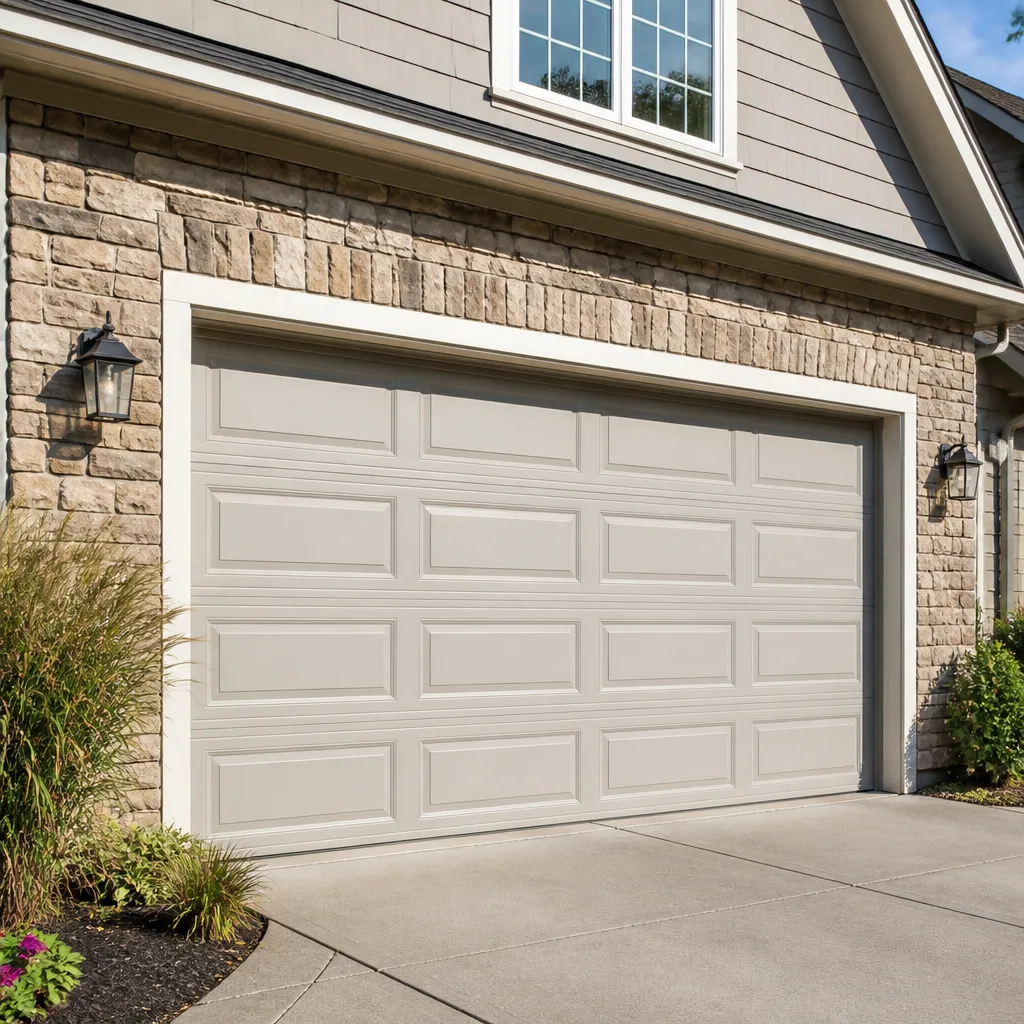
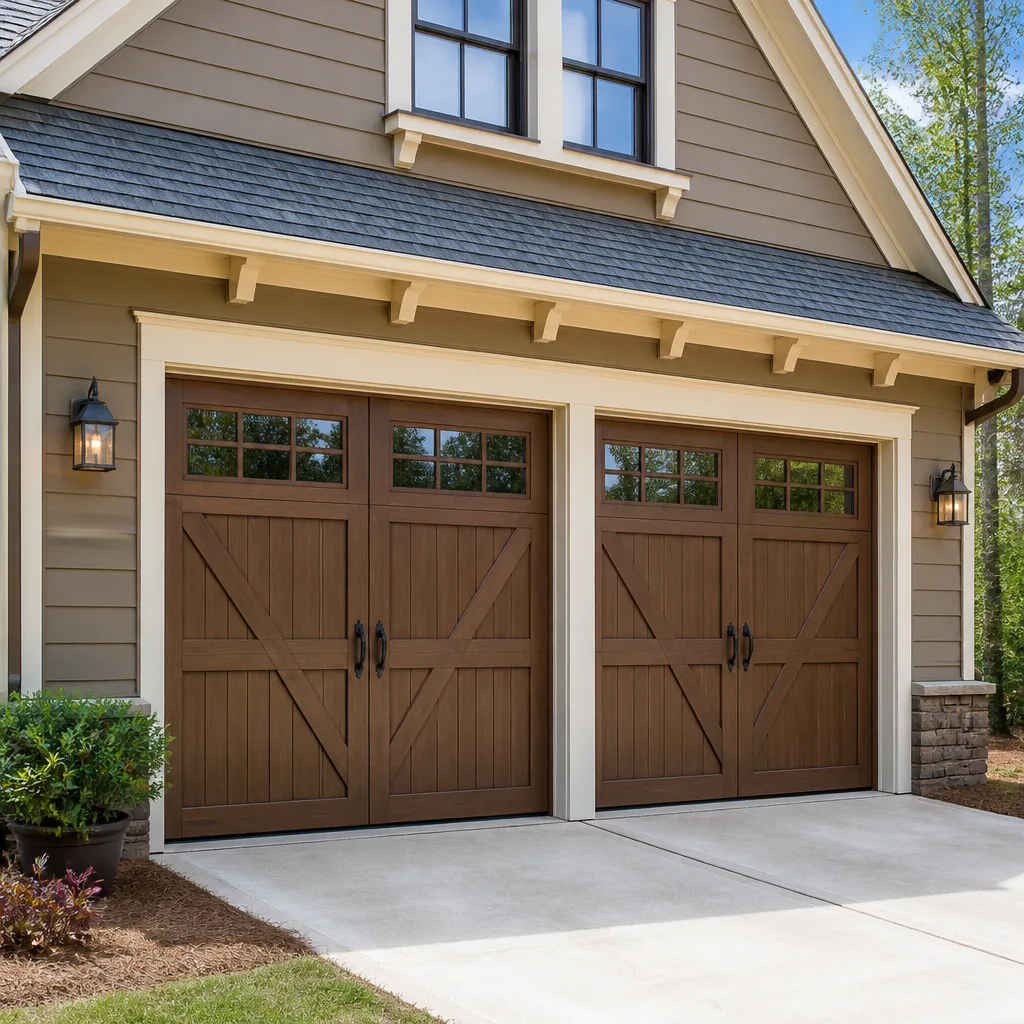
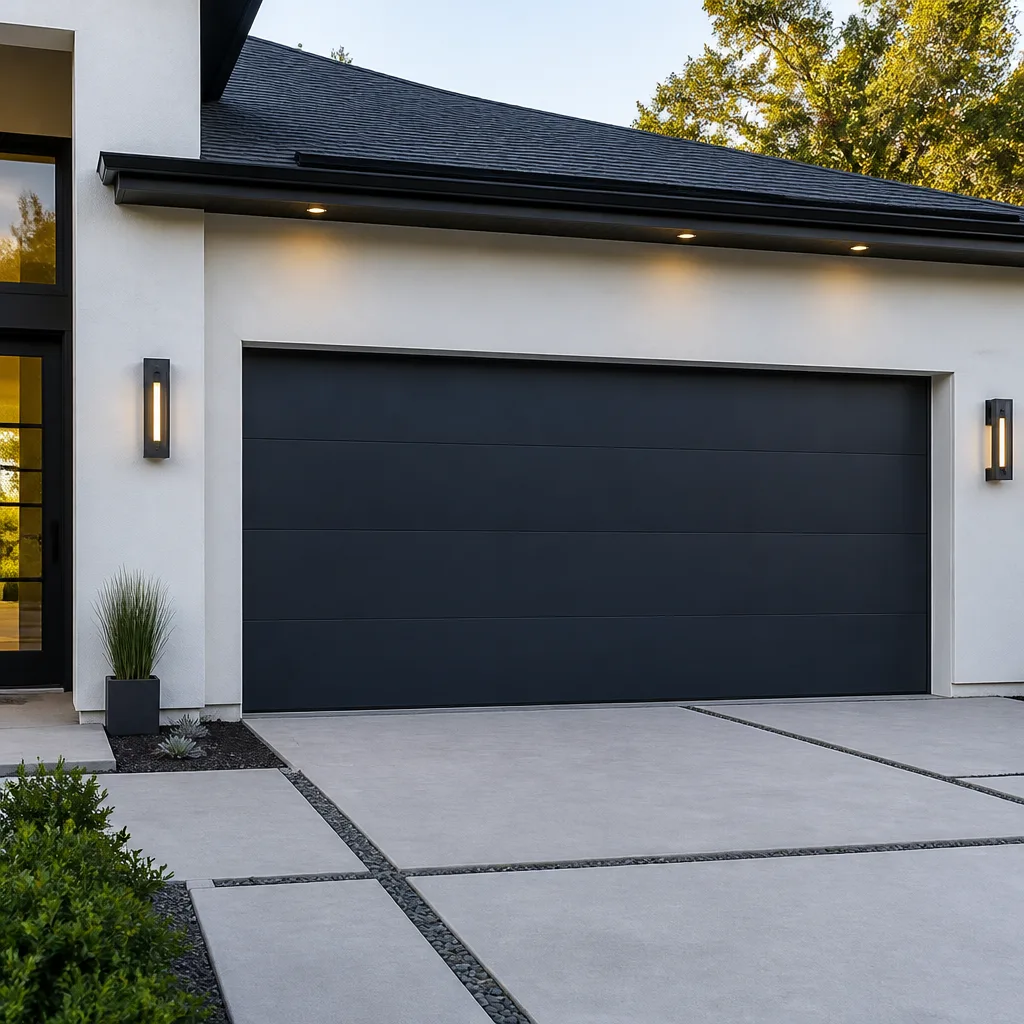
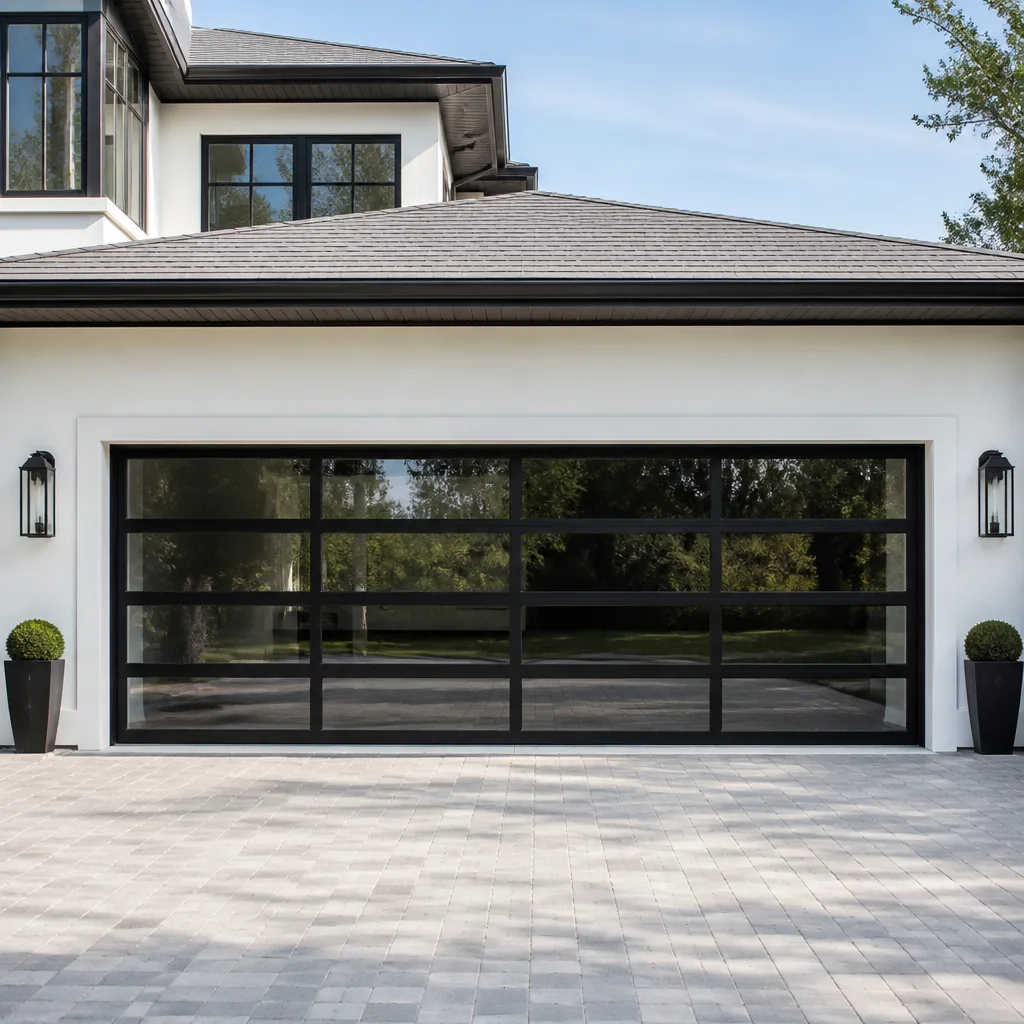
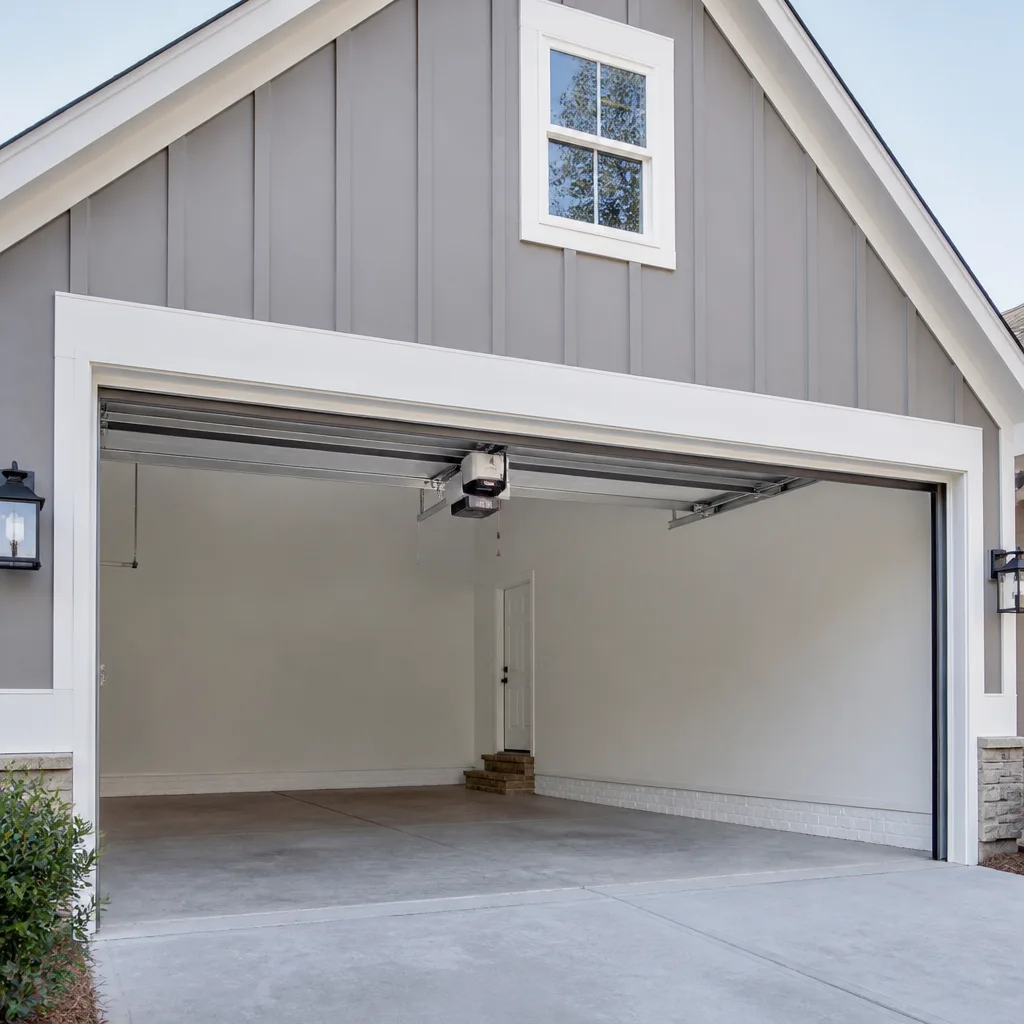
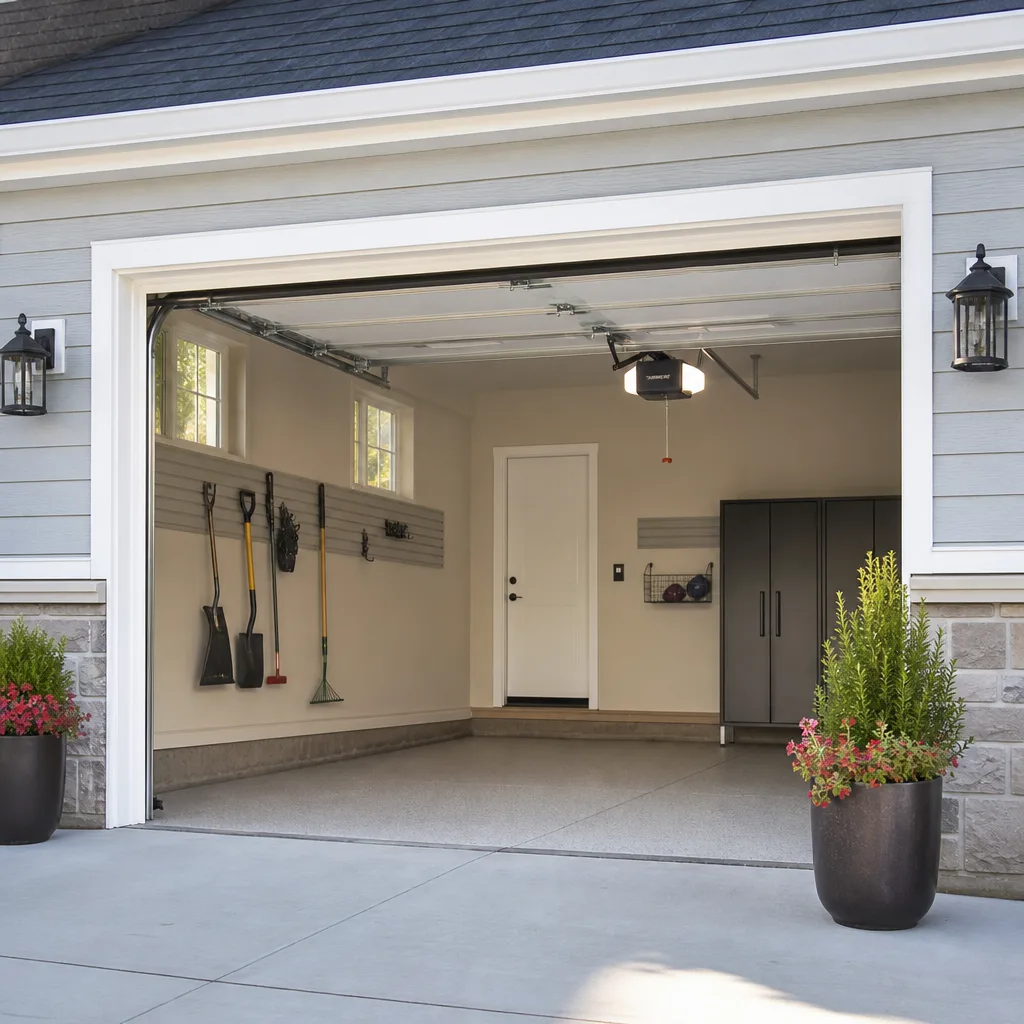
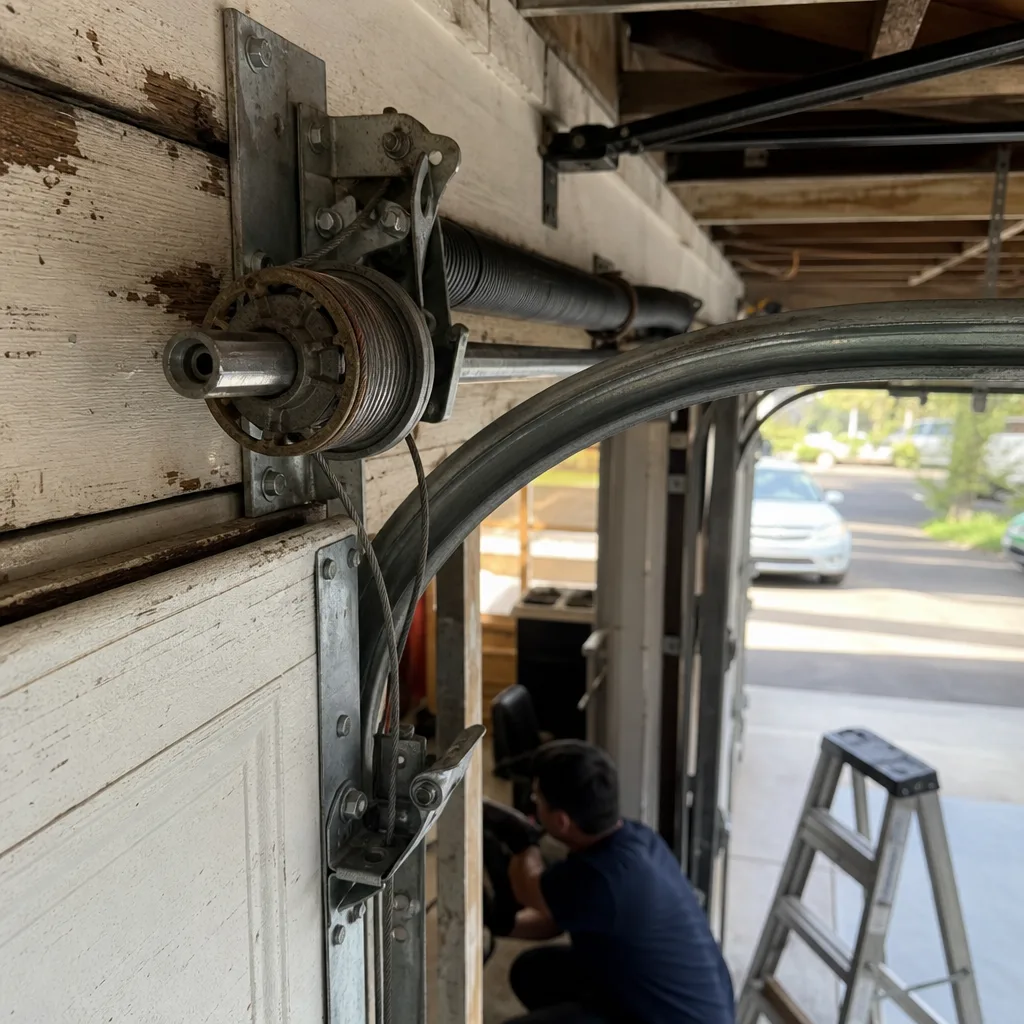 Before
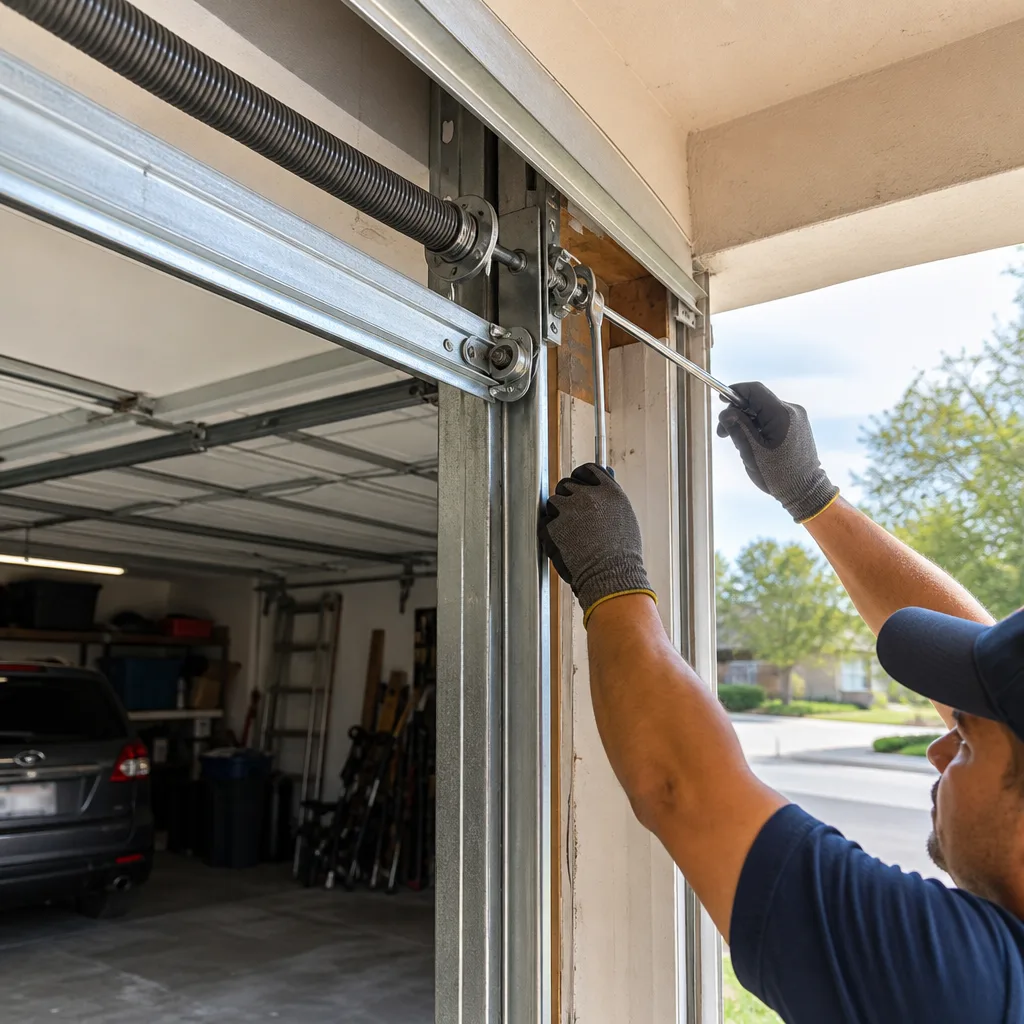 After
After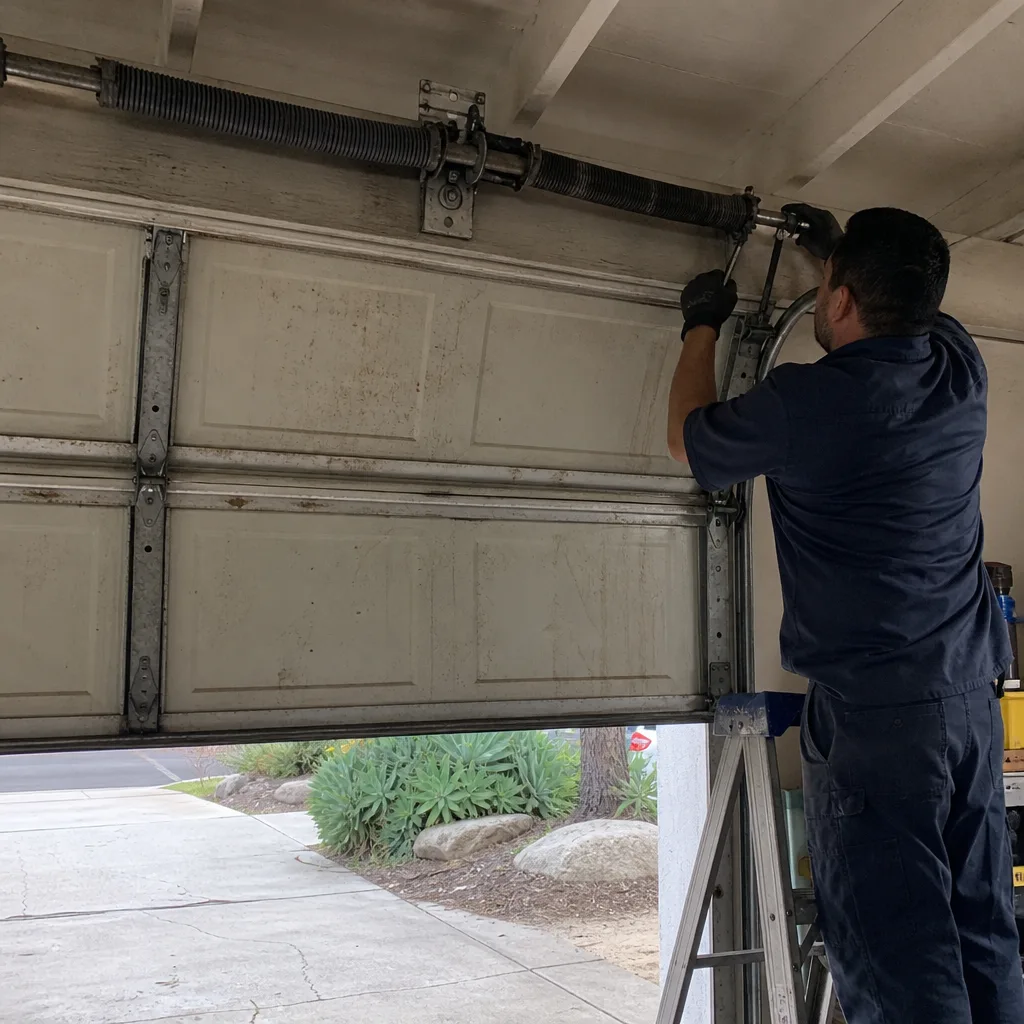 Before
 After
After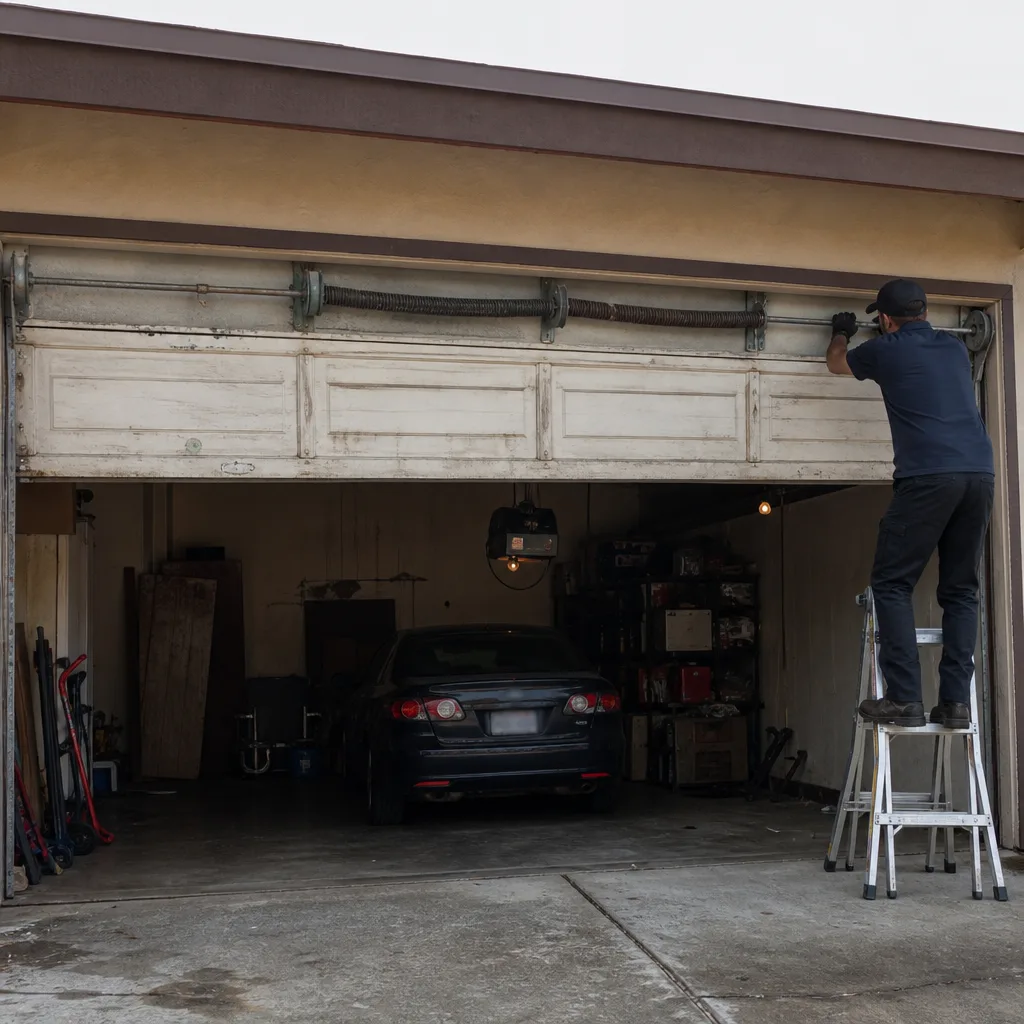 Before
 After
AfterThe Complete Guide to Garage Door in Poway
Your garage door is the largest moving part of your home and, in most Poway houses built after 1990, the primary entry point, yet the average homeowner can’t name three of its components until one of them fails at 6 a.m. on a Tuesday when the car is stuck inside and the kids are late for school. That’s not a criticism, it’s just how most of us are wired. We don’t think about the door until the door stops thinking about us. This guide is built to change that, because a homeowner who understands how the system works makes a smarter call in the moment, and smarter calls in Poway mean doors that last 15 to 20 years instead of getting patched together every other spring. We’ll walk through how Poway’s specific housing stock drives door choices, what every component actually does, what a fair price looks like in this market, how the city’s permit rules work, and how to read a quote so you know - plus point you to more guides & resources when you’re ready to go deeper exactly what you’re paying for.
Quick Answer
A garage door in Poway is best understood not as a single appliance but as a system of six interdependent parts: springs, cables, tracks, rollers, the opener, and the safety sensors. When one part is out of balance, it accelerates wear on the rest, which is why a $40 roller replacement ignored at the right moment can become a $600 spring-and-cable job eight months later. The single most useful thing a Poway homeowner can do is have the door’s balance and spring-cycle count checked once a year, before it becomes an emergency.
Table of Contents
- Why Poway Doors Are Different From the National Average
- The System Map: Six Parts That Must Work Together
- Buy vs. Repair: An Honest Breakeven Calculation for Poway Homes
- Poway Permit Triggers Most Homeowners Don’t See Coming
- How to Read a Garage Door Proposal So You’re Comparing Apples
- Poway Material Guide: Steel, Vinyl, and Wood in a Semi-Arid Climate
- The 20-Minute Annual Maintenance Routine That Adds Years
- Brands We Regularly Service in Poway
Why Poway Doors Are Different From the National Average
Poway is not a generic Southern California suburb, and your garage door does not live in a generic climate. Poway sits in a semi-arid valley where summer temperatures routinely climb into the 90s, where the dry heat pulls moisture out of vinyl and rubber seals, and where homes on the east side of town, toward Iron Mountain and the foothills, get a steady dose of wind-blown dust that works its way into tracks and roller bearings. A door that lasts 20 years in coastal Del Mar will often need its rollers and springs replaced here at the 10- to 12-year mark. That’s not a manufacturer defect. It’s the environment doing what the environment does.
Poway’s housing stock is a mix of three broad types, and each one has its own door profile. The tract homes built through the 1970s along Poway Road and in the Green Valley area were framed for 16-foot doors that are now often original or near-original, meaning the springs on many of those houses are past their rated cycle life and running on borrowed time. The hillside lots and custom builds along Espola Road and up toward Maderas Country Club tend to have heavier doors, 18 feet or more, with higher cycle springs and, in a meaningful number of cases, side-mount openers because the ceiling profile didn’t allow for a traditional rail. And the newer developments near Scripps Ranch and the Scripps Poway Parkway corridor, built in the 2000s, often shipped with builder-grade hardware, doors that look fine from the driveway but have low-cycle springs and nylon rollers that are already nearing the end of their design life. When we quote a door in Poway, the first question Otto asks is what year the house was built, because that tells us more about the system than the homeowner’s description of the noise.
The System Map: Six Parts That Must Work Together
Here’s the part most guides gloss over. A garage door doesn’t fail all at once. It fails piece by piece, and each piece that goes out of tolerance pulls on the pieces around it. Think of it like a truck suspension: one worn shock doesn’t announce itself, it just wears the tires faster and makes the next pothole hit harder. The door is the same. Here’s the map we walk through with every Poway homeowner on a service call.
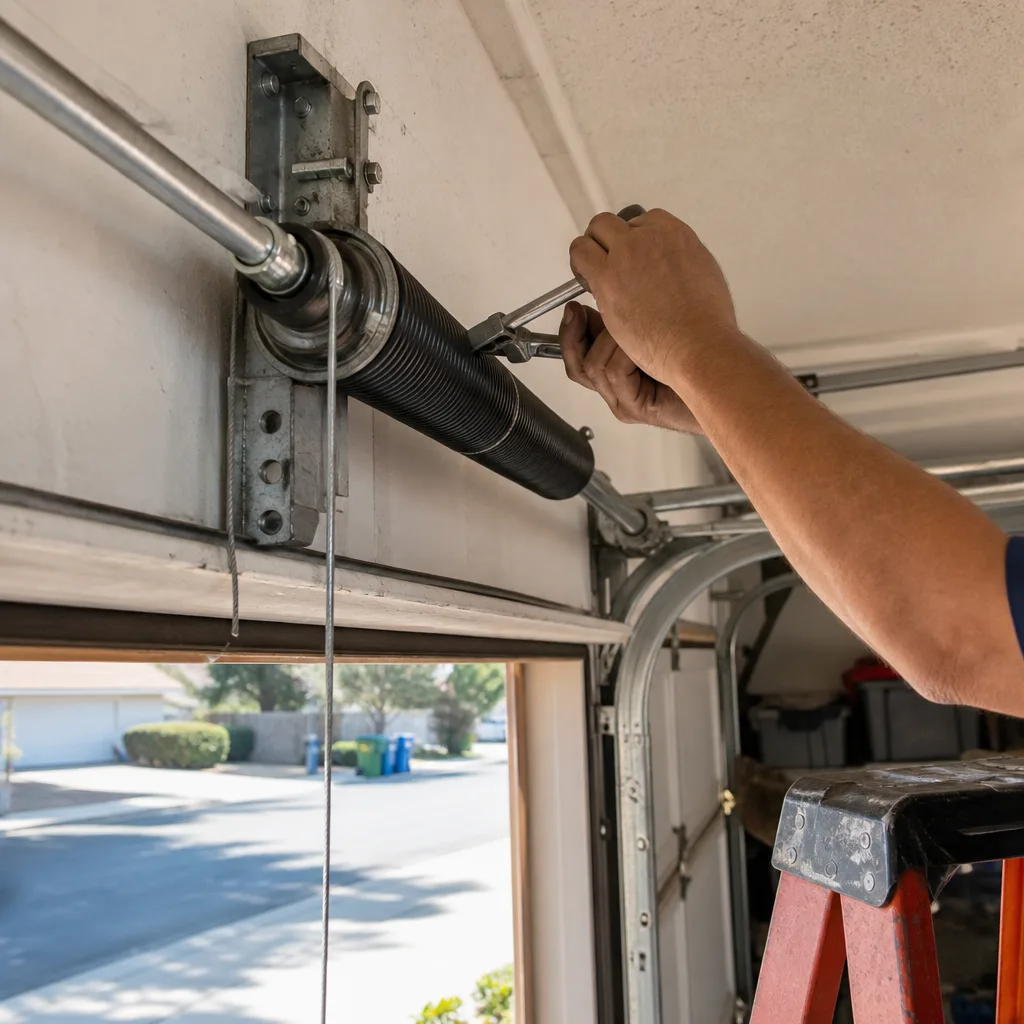
- The springs. A door is 200 pounds riding on two springs. Respect it. Standard torsion springs on a Poway two-car door are rated for 10,000 cycles, which for a typical family that opens and closes the door four to five times a day works out to roughly 7 to 10 years. When a spring breaks, the door becomes a dead load, and the opener, if engaged, will try to lift it anyway. That’s how openers die early.
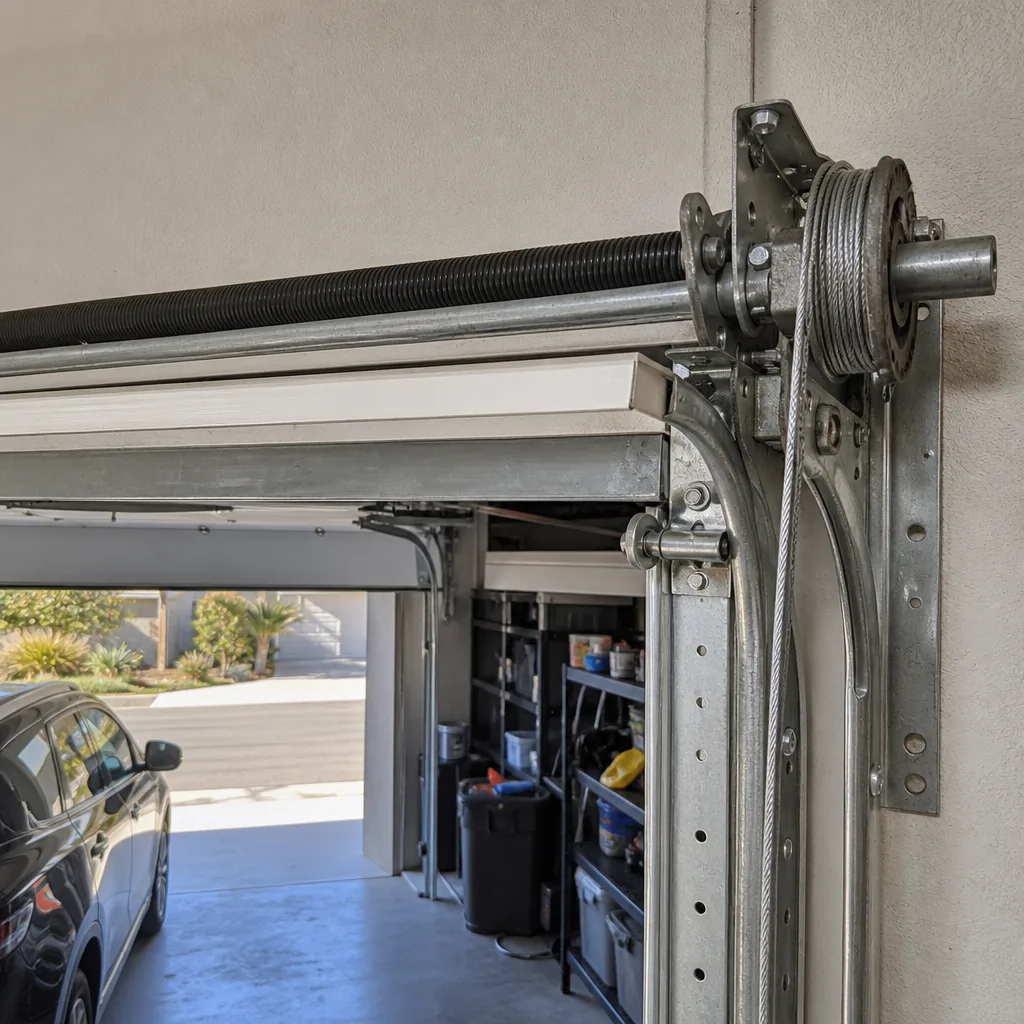
- The cables. The cables are what connect the spring tension to the bottom corners of the door. In a well-adjusted system, the cables are always under even tension. When a cable frays or starts to show rust blooms near the drum, it’s a warning sign the spring tension is drifting. A snapped cable under load is a whip-strike hazard, which is why we don’t tell homeowners to re-seat a jumped cable themselves.
- The tracks. Tracks are the rails the rollers ride on, and in Poway’s dustier neighborhoods they collect a fine grit that acts like sandpaper on the roller bearings. The tracks themselves rarely bend unless a vehicle taps the door or something falls into the opening, but they do drift out of vertical alignment over time as the wall and header settle.
- The rollers. Rollers are the cheapest part of the system and the most commonly ignored. Nylon rollers with sealed bearings, the ones we install on almost every Poway job, run quiet and last 12 to 15 years. Steel rollers are louder and wear the track faster. If the door sounds like a shopping cart with a wobbly wheel, it’s almost always a roller issue.
- The opener. If the opener is straining, the problem is almost never the opener. The opener is the motor, nothing more. When the door is balanced, a good opener lifts it with about the same effort it takes to lift a jug of milk. When the door is out of balance, the opener works against the dead weight and burns through its gear assembly in three years instead of ten. We see this pattern constantly in Poway homes where the original builder opener is still hanging on a door that’s had two spring replacements.
- The sensors. The two photo-eye sensors at the bottom of the track, the ones that stop the door from closing on a child or a pet, are a federal safety requirement since 1993. In Poway homes with west-facing garage doors, afternoon sun glare can trip the sensors and cause the door to reverse for no apparent reason. It’s a simple fix, usually, but it’s not one you want to bypass.
Buy vs. Repair: An Honest Breakeven Calculation for Poway Homes
Here’s the math that most national outfits won’t lay out for you, because it doesn’t sell as many new doors. A spring replacement in Poway, parts and labor, generally runs between $180 and $340 depending on the spring size and cycle rating. A set of high-cycle springs, rated for 25,000 to 30,000 cycles, costs more up front but spreads the replacement out over 15 to 20 years in a typical house. A full door replacement in Poway, by contrast, typically runs between $1,200 and $3,200 installed, depending on the size, material, window count, and insulation value.
So the breakeven question is not “is my door old?” but “what would I actually get from a new door that I can’t get from a repair?” We give Poway homeowners a three-question test. One: is the door itself structurally sound, meaning no rust through the panels, no cracked stiles? Two: is the track and hardware in good shape, or is the whole system running on original parts? Three: does the door still seal properly, or are you losing air-conditioned air through a one-inch gap at the bottom every summer afternoon? If the panels are solid and the track is square, the honest answer is usually to repair the wear parts and run the door another five to eight years. A repair-first approach on a structurally sound door saves $1,000 to $2,000 versus replacing on impulse, though the full DIY vs Professional Garage Door: The Poway Homeowner’s Decision Guide covers when each path makes sense.
That said, there’s a real case for replacement when the door is original to a 1970s or 1980s Poway home and has no insulation value, because an insulated steel door changes the temperature of the garage by 10 to 15 degrees on a July afternoon, and that affects the room above it or beside it. If your garage wall is shared with a bedroom or the garage sits directly under living space, a thermally broken, insulated door is a comfort upgrade, not an aesthetic one. The point is not to let a salesperson bounce you from a repair into a replacement without doing the breakeven math out loud.
Poway Permit Triggers Most Homeowners Don’t See Coming
Here’s a Poway-specific detail - one of several covered in our Garage Door Permits, Codes & Inspections in CA: What You Need to Know - that surprises a lot of homeowners and that most door companies would rather not bring up until the job is already underway. The City of Poway treats a like-for-like garage door replacement, same size, same footprint, same structural opening, as an exempt alteration. No permit. Swap the old 16-by-7 for a new 16-by-7 and you’re done. But the moment the work changes the opening, for example converting a single door to a double, widening the header, or installing a door where there wasn’t one, the city wants a building permit and an inspection, and in some cases an engineered header detail.
The other trigger is the door’s fire rating. In Poway homes where the garage wall is attached to the house, the door between the garage and the house is the fire separation, and the garage door itself is part of the assembly. A new door on an attached garage should be installed with a proper fire-rated assembly where the house wall ties into the garage. This is the kind of detail that shows up in the fine print of a cut-rate quote as “permits and inspections by owner,” which means the permit responsibility lands on you after the door is already hung. Our standing advice for Poway homeowners is to ask the contractor directly, “does this change the opening or just the door?” and “who pulls the permit if one is needed?” If the answer is vague, get it in writing.
You can see the full guide in our Garage Door Installation in Poway page, where we go through the process step by step, including what we handle on the permit side when a permit is actually required.
How to Read a Garage Door Proposal So You’re Comparing Apples
Two quotes for the same job in Poway should not be $800 apart, but if they are, the reason is almost always line items, not margin - a reality we break down fully in our Garage Door Cost Breakdown: The Poway Homeowner’s Reference for 2026. One company priced the door, the springs, the hardware, the haul-away, and the permit. The other priced the door, and the rest shows up as change orders after you’ve already said yes. Here’s the six-line method we tell Poway homeowners to use when comparing any two written estimates.
- What’s the panel thickness and insulation R-value? A 25-gauge non-insulated steel door is a different product from a 2-inch thick, polyurethane-insulated door with an R-value of 12 to 18. If the quote doesn’t state the gauge and the R-value, it’s a blank check.
- What springs are included, and how many cycles are they rated for? A standard 10,000-cycle spring is not a high-cycle spring. If the quote says “springs included” but doesn’t say the cycle rating, assume it’s the cheap one and ask.
- Is the opener part of the bid or not? Some door quotes include the opener; some don’t. This is the single biggest source of sticker shock at the end of a job.
- Is haul-away and disposal included? A 16-foot steel door weighs a few hundred pounds and does not fit in a standard trash bin. If the old door’s disposal is not on the quote, that’s a $50 to $100 surprise coming.
- Are the seals and weatherstripping included? The bottom seal and the side and top weatherstripping are wear parts. A new door with old seals is half a job.
- What’s the warranty, and who honors it? A lifetime warranty from a company that won’t exist in five years is worth the paper it’s printed on. Otto’s 90-Day Done Right Promise is on every invoice, and it’s backed by one call to Otto himself, not a service queue.
If one quote spells out all six and the other doesn’t, you’re not comparing prices. You’re comparing a real number to a placeholder.
Poway Material Guide: Steel, Vinyl, and Wood in a Semi-Arid Climate
Poway’s climate is dry. That’s the single fact that should drive your material choice. Doors that work beautifully in damp coastal air, wood in particular, are a maintenance burden here. Doors that handle the dry heat well, steel and vinyl, are the default. Here’s what actually holds up from one end of Poway to the other.
Steel. The most common option, and for good reason. A quality 24- or 25-gauge steel door with a multi-layer sandwich construction and a baked-on finish will run 15 to 25 years in Poway’s climate, and if the panels get dented by a bike or a stray basketball, they can often be re-skinned or painted without a full replacement. The brands we install regularly, Amarr and Wayne Dalton, have better paint systems than the builder-grade doors found in the newer Scripps Poway Parkway developments. The trade-off: steel dents on impact and, if scratched through the finish, will rust at the scratch line in a couple of seasons.
Vinyl. Vinyl doors are the quiet choice. They resist dents, they don’t rust, and they don’t need paint, which matters on a west-facing Poway door that gets baked every afternoon. Vinyl is a solid pick for the eastern stretches of Poway, near the foothills where wind-blown dust and occasional hail from monsoon-season storms can pit a steel finish. The trade-off is color: vinyl comes in a narrower range, and repainting down the road is not really an option.
Wood. If you have a craftsman home in Old Poway or a custom build with architectural weight, wood is gorgeous, full stop. But wood in Poway’s dry heat expands, contracts, and chews through its own finish, and a wood door in direct sun needs refinishing every few years whether you like it or not. For most homeowners, we steer toward a steel door with a wood-grain embossed finish that gives the look without the upkeep. If you do want true wood, plan on the maintenance, and we’re happy to build it either way.
For the deeper dive on materials, sizes, and the full ordering process, our Otto’s Garage Door home page and the Garage Door Repair in Poway page cover the rest.
The 20-Minute Annual Maintenance Routine That Adds Years
Most Poway homeowners don’t touch their garage door until it makes a sound they can’t ignore. We get it. But the doors we see last the longest in this valley are the ones where someone does a quick, deliberate once-over every year. Not a full service, just a 20-minute walk around. Here’s the routine we recommend, in order.
- Listen. Stand inside the garage and run the door through a full open-and-close cycle. Smooth and quiet? Good. Grinding, popping, or a rhythmic scrape? That’s a roller or a track issue, and it’ll get worse.
- Look at the springs. If you see a gap in the spring coil, maybe two to four inches of separation, that spring is broken and the door is running on the other spring alone. Do not try to close the gap yourself. A torsion spring under tension can break bones. Call a pro.
- Check the cables. Look at both bottom corners of the door where the cables attach. Fraying, rust, or a gap between the cable and the door edge means the tension is off. This is not a DIY fix.
- Test the balance. Pull the red release handle, the one that disconnects the opener, and then lift the door by hand. It should rise smoothly and stay at about waist height on its own. If it slams up or drops down, the springs are out of adjustment.
- Test the safety reversal. With the door open, put a roll of paper towels on the floor under the door’s path and close it. The door should reverse the moment it contacts the roll. Then do the same with the photo-eye sensors: wave an arm across the beam while the door is closing and it should reverse. These checks are the difference between a safe door and a legal liability.
- Look at the weatherstripping. The rubber seal along the bottom and the weatherstripping along the sides dry out and crack in Poway’s heat. Replacements are cheap, maybe $30 to $60 installed, and they pay for themselves in cooler air and fewer bugs.
If any of these checks feels uncertain or you’d rather have a second set of eyes, give us a call. We’ll walk through the results with you over the phone, and Otto will tell you honestly what needs attention now and what can wait.
Brands We Regularly Service in Poway
One thing we hear from homeowners all over Poway is a version of “the last company told me I had to replace the whole door because my brand was discontinued.” That’s a sales line, not a mechanical reality. Garage door components are far more interchangeable than opener rails are, and most doors from the last three decades run on standard hardware. We service and install parts for Raynor, Amarr, Wayne Dalton, and Craftsman, among others, and we carry the common spring sizes, cables, rollers, and hinges on the truck so we’re not leaving Poway mid-job to hunt a part. If the opener is the problem rather than the door itself, our Garage Door Opener in Poway page goes into detail on belt versus chain drives, battery backup, and the WiFi-enabled openers that work best in this area’s power-outage season.
Common Mistakes to Avoid
- Ignoring a broken spring and running the door on the opener. The door is now dead weight, and the opener will burn through its gear train trying to do the spring’s job. In Poway we regularly see openers killed exactly this way, and the replacement is three times the cost of the spring would have been.
- Buying the cheapest spring available. A 10,000-cycle spring on a door that cycles five times a day is a seven-year part. For most Poway families, a high-cycle spring is the better financial decision, even though it costs more on the day of service.
- Comparing quotes without reading the line items. If one Poway contractor quotes $1,800 with springs, hardware, haul-away, and seals, and another quotes $1,200 for “new door installed,” you’re not looking at a $600 savings. You’re looking at a door and nothing else.
- Lubricating the wrong parts. Spraying lubricant on the track is a common mistake. The rollers and hinges take the lubricant; the track just collects dust, and in Poway’s dry season that dust turns into grinding paste.
- Assuming a like-for-like replacement is always a DIY weekend. The panels might be manageable, but the spring system holds the same force regardless of who installs the door. A torsion spring under tension deserves a trained hand, which is why we recommend a pro for any job that involves the spring assembly.
- Skipping the safety reversal test after a repair. If the door’s auto-reverse feature is out of adjustment, the door becomes a dangerous object in a house with kids or pets. After any repair or adjustment, test it. It takes one minute.
- Buying the door but not the opener as a pair. A new door on a tired opener, or a new opener on a unbalanced door, is a half-finished job. The door and opener are a team, and they should be evaluated together.
When to Call a Professional
Call a professional when the spring breaks, when a cable comes off the drum, when the door comes off its tracks, when the safety reversal test fails, or when the door won’t lift at all and a vehicle is trapped inside. Those are not the moments for a weekend experiment. A torsion spring under tension can seriously injure you, and a door that’s partially off its tracks can come down in a hurry. For everything else, the annual maintenance walkthrough and a phone call for a quote will keep you ahead of the failures. Otto’s Garage Door offers free estimates in Poway, and Otto carries the owner’s name on his license, his van, and his invoice. Call (858) 330-1549 and you’ll get a live person, a straight answer, and a number that doesn’t change when he pulls into your driveway.
Frequently Asked Questions
A spring replacement on a typical Poway two-car door generally runs between $180 and $340, depending on the spring size, cycle rating, and whether the job is emergency service or scheduled. The price is quoted and agreed before any work starts, and a standing offer pays $40 off any repair over $200. Call (858) 330-1549 for an exact quote, the estimate is free.
Standard 10,000-cycle springs on a Poway door that cycles four or five times a day last roughly 7 to 10 years, while high-cycle springs rated for 25,000 to 30,000 cycles routinely last 15 to 20 years in this area’s dry, dusty conditions. I count spring cycles the way you count tire miles, and I’ll tell you what’s left on yours.
A like-for-like garage door replacement, same size and in the same opening, does not require a City of Poway permit, but changing the opening width, converting a single door to a double, or adding a new opening does require a building permit and possibly an engineered header. A contractor who deflects the permit question is not doing you a favor, and the responsibility lands on you if the city catches it later.
In Poway’s dry heat the factory lubricant on rollers and hinges evaporates faster than in coastal air, and wind-blown dust from the foothills works into the track and acts like a fine grit on the roller bearings. The squeak is usually worn rollers or dry hinges, and the right fix is replacement or proper lubrication, not hosing the track down with spray.
If a spring breaks at nine at night and your car is sealed in the garage, that’s a same-day call for us. Otto answers the phone himself outside of business hours, quotes the job on the call, and holds the number when he gets there. We carry the common springs, cables, and rollers for Poway doors on the truck, so most repairs are done in a single visit.
Ask if the owner’s name is on the license, not just the name of a holding company. Ask if the quote on the phone is the quote at the door. Ask if the technicians are background-checked and their warranty is on paper. A local shop with a published Poway address and a real name attached beats a call center three states away on every one of those counts.
The Bottom Line
A garage door in Poway is a system, and systems don’t forgive laziness. The homeowner who knows the six components, does a 20-minute walkthrough once a year, watches for the permit triggers, and reads a quote line by line will spend less money over a decade and will never be the person standing in the driveway at 6 a.m. with a door that won’t move and a car trapped behind it. When a repair or a replacement does come due, the smartest call in Poway is to a local, owner-operated shop where the name on the van is the name on the invoice and the name on the license. Otto’s Garage Door has been serving Poway since 2004, and the number never changed: (858) 330-1549.
Written by Otto Reinhardt, Owner at Otto’s Garage Door, serving Poway since 2004.