
Last updated September 10, 2026
Full 25-point door and opener safety check with every visit - springs, cables, rollers, tracks, and your LiftMaster or Chamberlain opener included
You get a price before we start. It does not change when the truck arrives.


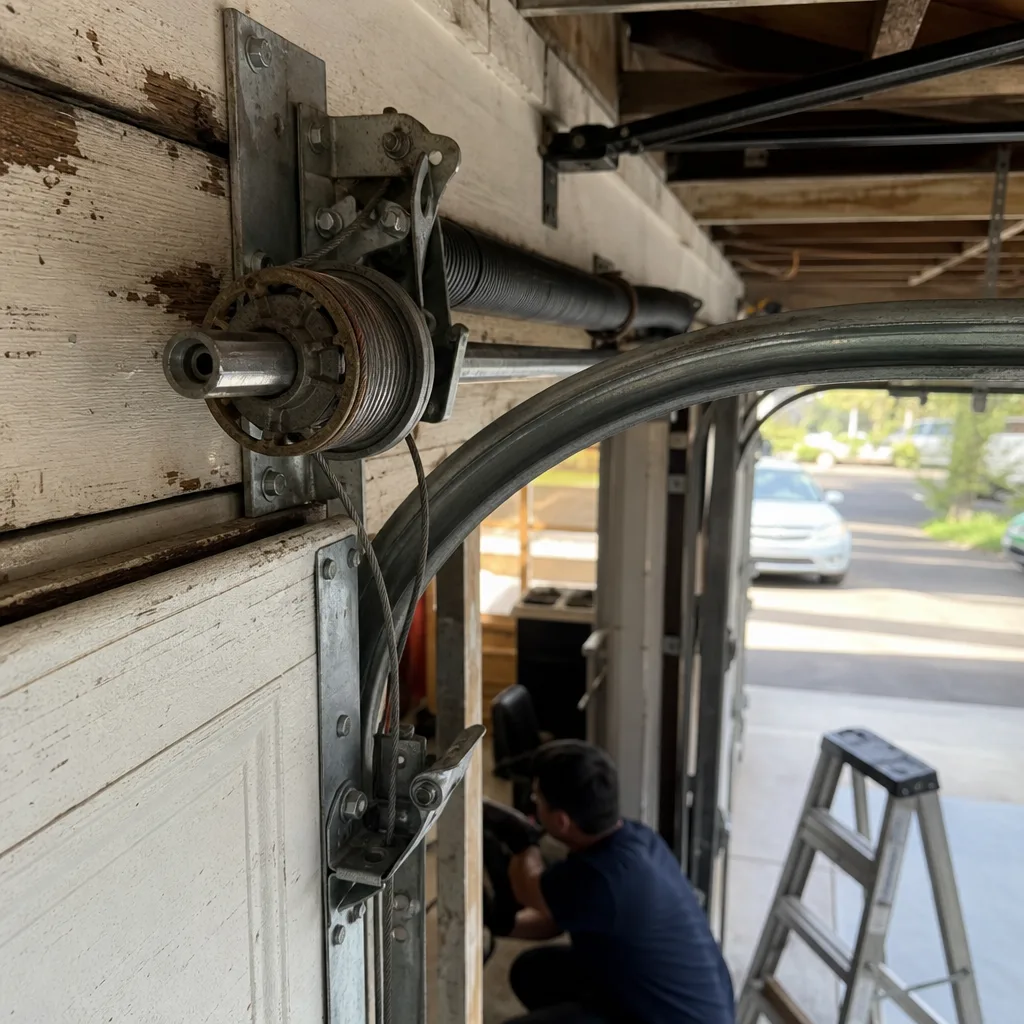 Before
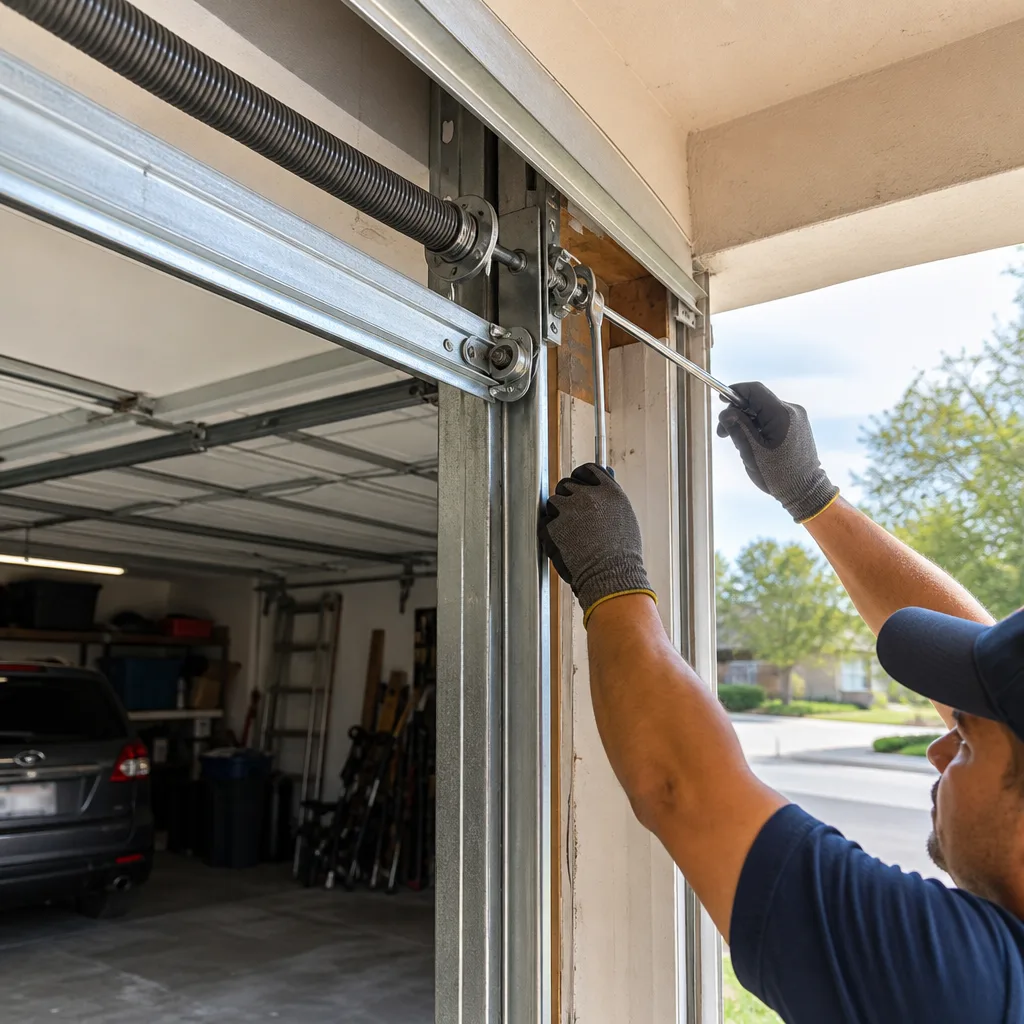 After
After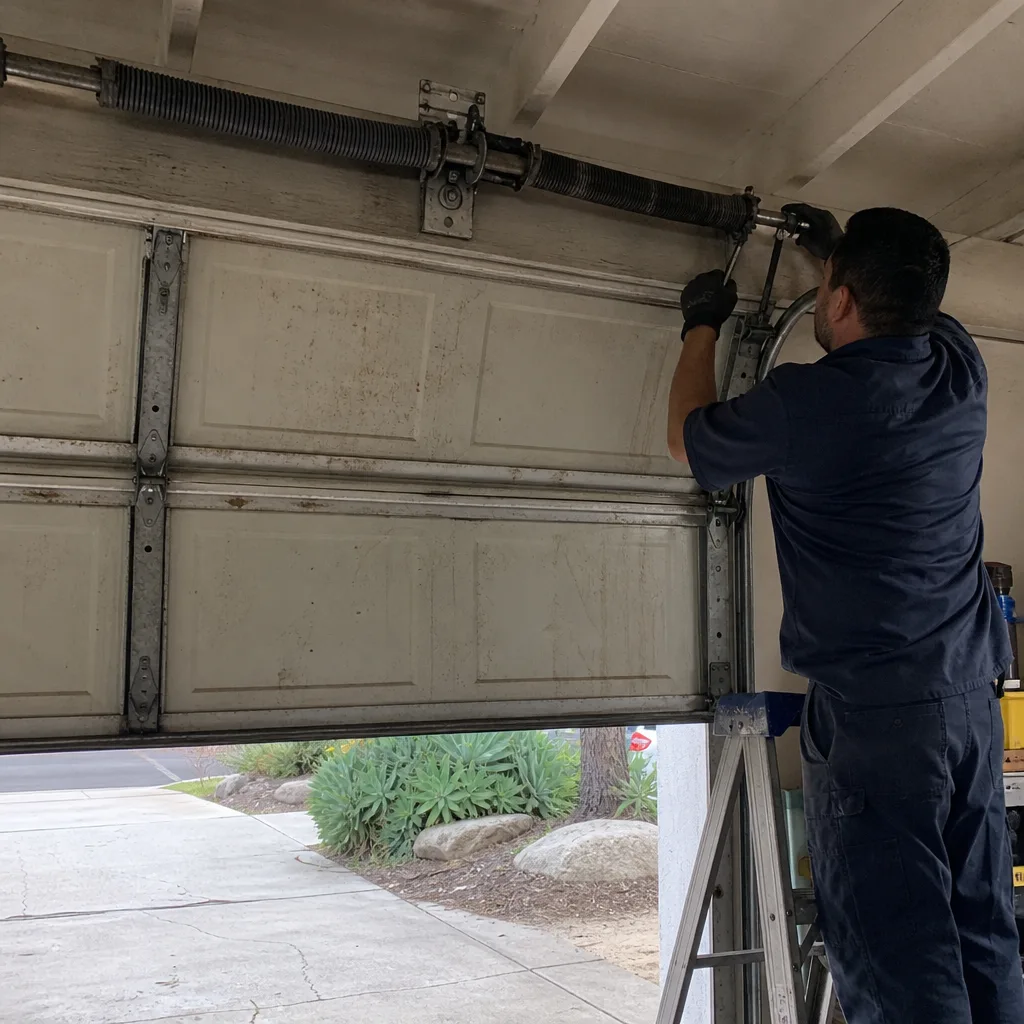 Before
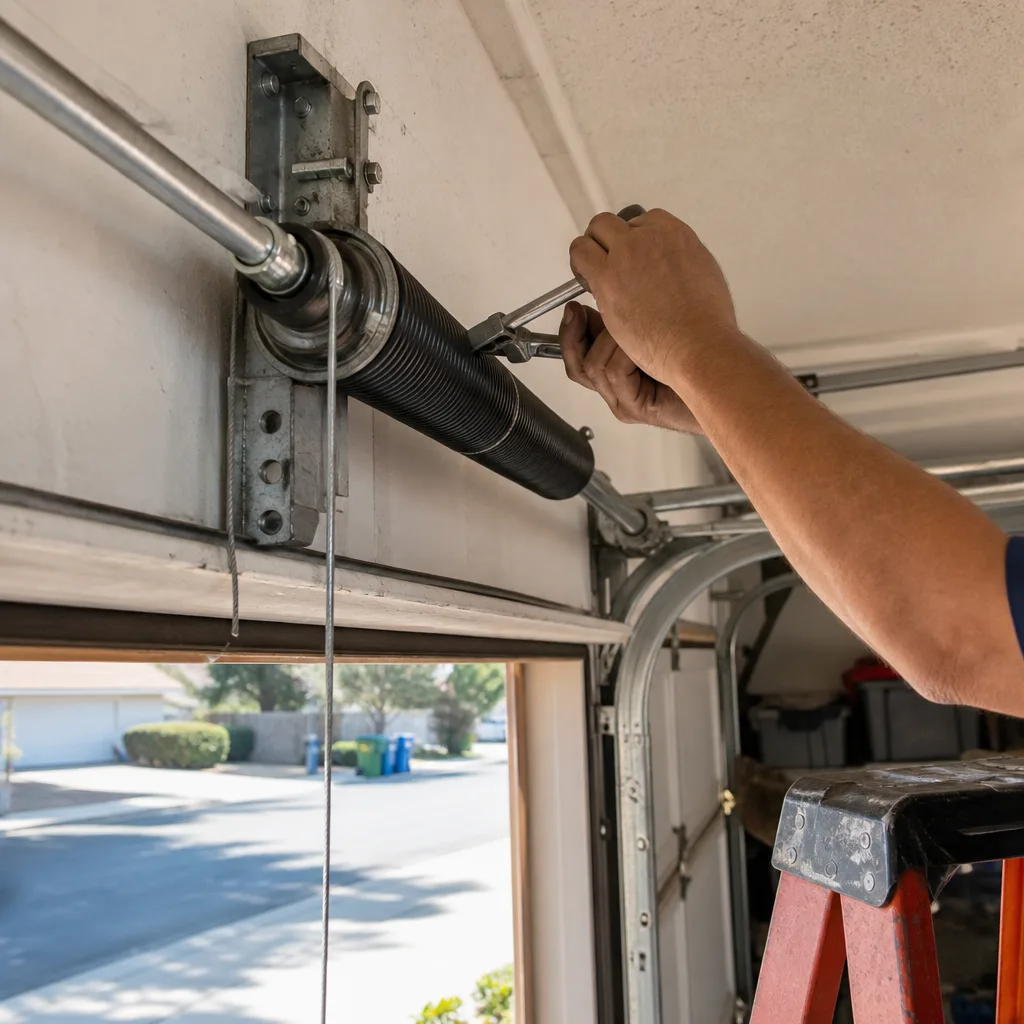 After
After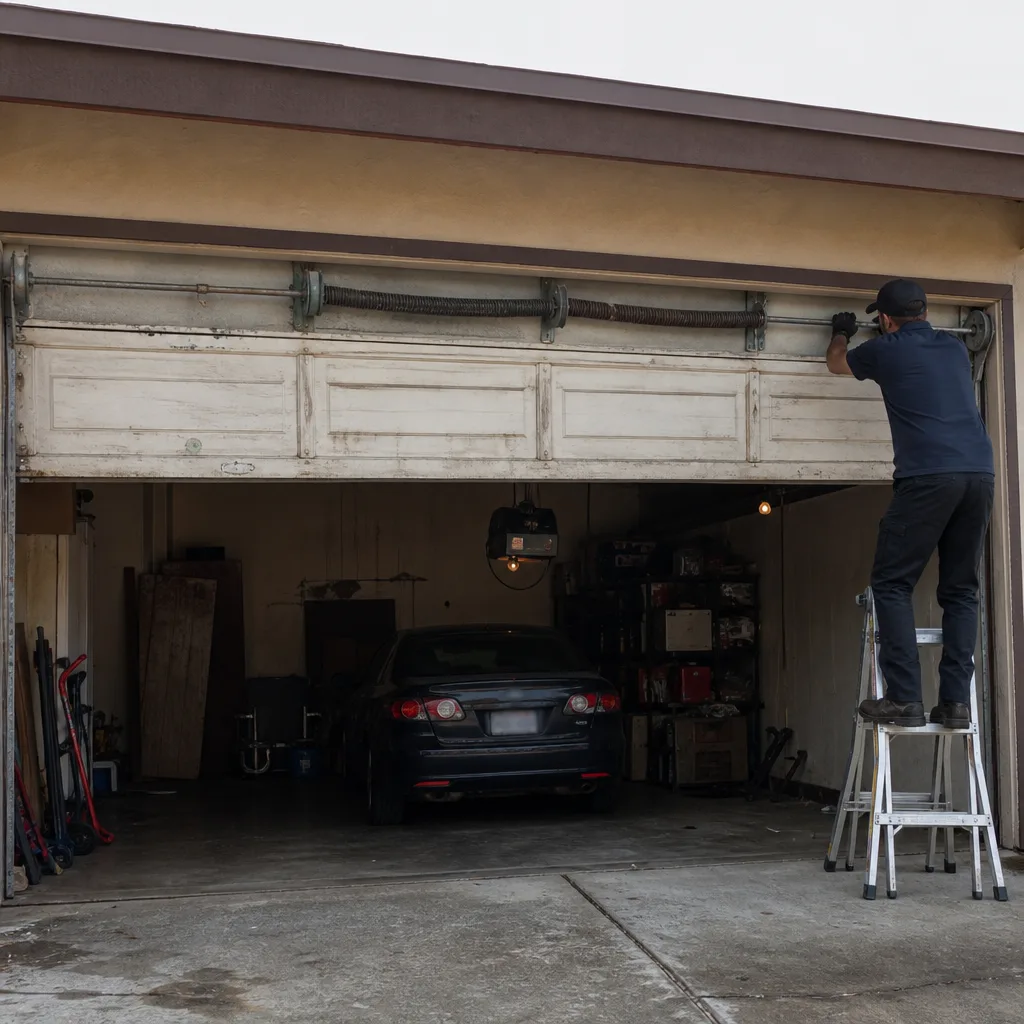 Before
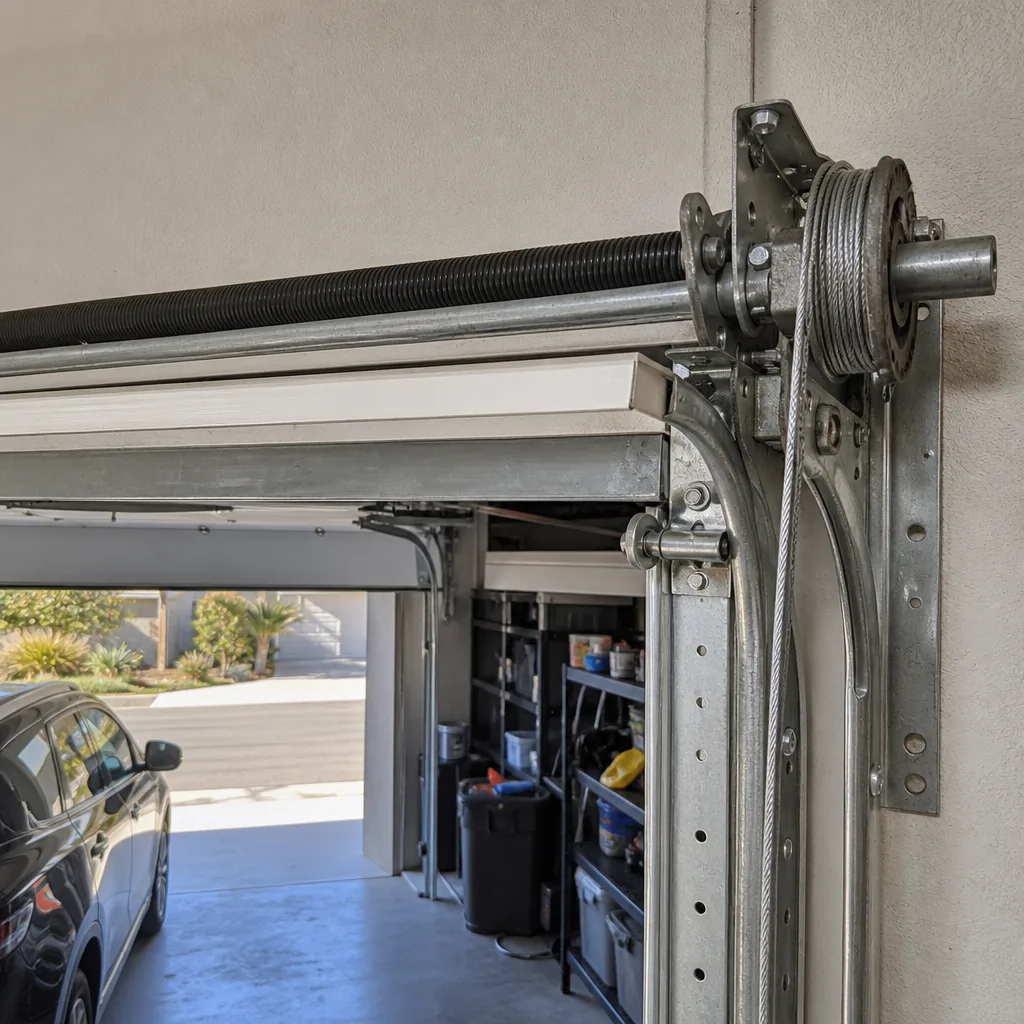 After
AfterSeasonal Garage Door Care for Poway: Year-Round Homeowner’s Guide
The marine layer that rolls into Poway from May through July doesn’t feel dangerous to a garage door. It’s just fog, right? But that moisture settles on unpainted steel hinges, seeps into unlubricated rollers, and sits against weatherstripping every single morning. Then October arrives, the first Santa Ana kicks up dust and debris, and suddenly the door grinds like it’s been chewing gravel. This guide names the four stress periods Poway actually has and gives you the specific 30-minute tasks for each one, or see our Complete Guide to Garage Door in Poway for deeper coverage. Do these, and your door will outlast the neighbor’s by a decade.
Quick Answer
Poway doesn’t have four classic seasons, but it does have four distinct stress periods for a garage door: marine layer moisture (May through July), peak heat expansion (August and September), Santa Ana wind debris and pressure cycles (October and November), and the mild-but-deceptive winter freeze risk on higher-elevation properties near Blue Sky Ecological Reserve. Seasonal care means checking lubrication in spring, testing balance before summer heat, clearing tracks and checking the auto-reverse before fall winds, and replacing the bottom seal before winter rains. Total time: about thirty minutes per season.
Table of Contents
- Poway’s Four Functional Seasons, Not the Ones on the Calendar
- Marine Layer Season (May-July): The Quiet Rust Machine
- Peak Heat Season (August-September): When Springs Lose Their Grip
- Santa Ana Season (October-November): Debris and Pressure Cycles
- Winter Freeze Risk (December-February): What Blue Sky Homeowners Miss
- Weather Seal Replacement Before the Rainy Season
- The One-Page Seasonal Calendar: Print This and Tape It to the Water Heater
- Common Mistakes to Avoid
- When to Call a Professional
- Frequently Asked Questions
- The Bottom Line
Poway’s Four Functional Seasons, Not the Ones on the Calendar
Forget winter, spring, summer, fall. A garage door in Poway experiences stress differently than a garage door in Chicago or Boston. We’ve been repairing and installing doors in this city since 2004, and we can tell you exactly what the door feels. The four periods that actually matter here are the marine layer stretch from May through July, the dry heat spike in August and September, the Santa Ana pressure swings in October and November, and a short but real freeze window from December through February at higher elevations. Each one attacks a different component.
Here’s what most homeowners miss: the two periods that cause the most damage don’t look like weather events at all. A gray May morning feels mild. A warm October afternoon feels pleasant. But the moisture from the first and the airborne grit from the second are doing measurable wear. By the time the door misbehaves, the damage is already done. This guide gives you the specific tasks for each period so you stay ahead of it instead of chasing it.
If you want a deeper look at the mechanical side of how these stresses play out, start with our Garage Door Repair in Poway page, which covers the common failures we see from each of these periods.
Marine Layer Season (May-July): The Quiet Rust Machine
Poway sits far enough inland that the marine layer burns off by mid-morning most days, but it sits close enough to the coast that overnight fog and morning overcast are regular visitors from May through July. Here’s the thing nobody tells you: that fog deposits actual moisture on every exposed metal surface of your garage door. Not rain, not puddles, just a fine, persistent dampness that condenses on steel hinges, roller stems, and spring coils. If those components are unpainted or have worn paint, oxidation begins. Quietly. Every morning.
The evidence shows up in October. You press the wall button and the door groans. The rollers don’t spin, they slide. The hinges squeak. That’s marine layer damage that sat unaddressed for three months. The fix is simple and cheap: lubricate the moving parts every spring. Use a white lithium grease on hinges and roller stems, and a light silicone spray on the torsion spring. Do not use WD-40. It’s a solvent, not a lubricant, and it will strip whatever protection is left.
Your May-July checklist (20 minutes):
- Wipe down hinges, roller stems, and spring coils with a dry rag to remove accumulated moisture and salt film.
- Apply white lithium grease to each hinge pivot and roller stem. A little goes a long way.
- Spray the torsion spring with silicone lubricant along its entire length.
- Check the weather seal at the bottom of the door for brittleness. Moisture accelerates rubber degradation.
- Open and close the door twice, listening for any new noise. A healthy door is almost silent.
If you hear grinding during this test, don’t ignore it. The fix now is a $40 lubrication and adjustment. The fix in October is often a full roller replacement. We’ve seen this pattern on doors from Rancho Bernardo Road to Garden Road for two decades.
Peak Heat Season (August-September): When Springs Lose Their Grip
August in Poway regularly pushes into the high 90s. September isn’t much cooler. Your garage, especially if it faces west or has no insulation, can hit 110 degrees by mid-afternoon. That heat does something specific to torsion springs. Steel expands when it gets hot, which changes the spring’s resting tension. A door that was perfectly balanced in March can struggle to stay open in August because the spring has effectively loosened. The door feels heavy. The opener strains. And a straining opener is the problem, almost never the opener itself. The spring is the problem.
Here’s the test. Disconnect the opener using the red release handle. Lift the door by hand to waist height. It should stay put, neither rising nor falling. If it drops, the spring tension is too low, and the heat has revealed what the cool months were hiding. If it climbs on its own, the tension is too high. Both conditions force the opener to work against the door, which shortens the opener motor’s life significantly.
Your August-September checklist (10 minutes):
- Run the balance test described above on a cool morning before the garage heats up.
- Listen for changes in the opener’s sound when lifting. A struggling opener hums louder and runs slower.
- Check the door’s vertical track alignment. Heat can warp wood frames and shift metal track brackets slightly.
- Feel the door’s surface on a hot afternoon. If it’s too hot to touch for more than two seconds, consider garage ventilation or lighter-colored paint next time you replace it.
Adjusting torsion spring tension is not a DIY job. A door is 200 pounds riding on two springs. Respect it. The spring is under enough tension to remove fingers or worse. If your balance test fails, call someone who counts spring cycles the way you count tire miles. For context on what that repair involves, see our Garage Door Opener in Poway page, which covers the relationship between spring balance and opener longevity.
Santa Ana Season (October-November): Debris and Pressure Cycles
October is when we see the first serious Santa Ana winds. Dry air pushes in from the high desert, gusts hit 30 to 50 mph, and everything loose in Poway takes flight: eucalyptus bark, palm fronds, oak leaves, construction dust from new builds off Twin Peaks Road. Your garage door track is a debris trap. And the pressure swings that come with Santa Ana conditions, rapid barometric drops followed by dry heat, cause micro-movements in the door’s fit against the frame.
This is the most common fall failure we see: a door that worked fine all summer suddenly jams or reverses mid-cycle because something is wedged in the track, or because the auto-reverse sensor has shifted out of alignment and now triggers falsely. The fix is preventive. Clean the tracks before the winds get bad, not after the door fails.
Your October-November checklist (30 minutes, the most important of the year):
- Clear both vertical tracks. Use a vacuum with a narrow attachment or a dry cloth. Remove every leaf, every cobweb, every bit of grit. A single piece of debris wedged in the track can throw the door off balance and bend a panel.
- Inspect the cables. Look at both lift cables for fraying, rust, or slack. A frayed cable under Santa Ana load is a catastrophic failure waiting to happen. Do not touch a cable that appears damaged. Call a professional.
- Test the auto-reverse sensors. Place a 2×4 flat on the ground under the door and lower it. The door should reverse instantly upon contact. If it doesn’t, the sensitivity needs adjustment. This is a safety system, not a convenience feature.
- Check the weather seal fit. Santa Ana winds push dust and small debris under a worn seal. If you can see daylight under the closed door, replace the seal. (Warm months are the best time to do this, see below.)
- Tighten all track bolts and hinge screws. Vibration from wind gusts loosens hardware over time. A socket wrench and five minutes prevent a track from separating from the wall.
We’ve been answering calls in Poway about Santa Ana related door failures since 2004. The doors that were cleaned and checked before the winds arrived are the doors that didn’t need an emergency visit. The ones that waited now spend an afternoon waiting for a repair.
Winter Freeze Risk (December-February): What Blue Sky Homeowners Miss
Poway doesn’t freeze the way Julian or Pine Valley does. But the canyons and ridges near Blue Sky Ecological Reserve, along with the higher streets off Espola Road and around Old Coach Road, regularly dip into the low 30s on clear December and January nights. That’s cold enough to do two things: stiffen the lubricant you applied in spring, and make the bottom weather seal brittle and inflexible. A door that opens smoothly at noon may stutter at 6 a.m. when the temperature is 34 degrees.
The homeowner mistake is treating Poway winter as a non-season. It’s mild, yes. But it’s deceptive. The cold less than freezing, but it’s still a 40-degree temperature swing from the afternoon high. That thermal cycling works on every component: metal contracts, rubber hardens, lubricant thickens. And because nobody thinks about their garage door in a Poway winter, small problems compound unseen until the first hot day of March, when expansion reveals what contraction was hiding.
Your December-February checklist (15 minutes):
- Run the door early in the morning on a cold day, before the sun hits the garage. That’s the true cold-weather condition test.
- Listen for stiffness or grinding. If present, reapply silicone spray to the spring. Cold weather doesn’t wash lubricant away, but it reduces its effectiveness.
- Feel the bottom seal. It should be pliable, not stiff. If it feels like hard plastic, plan to replace it in spring when the rubber is easier to work with.
- Check the door’s closing force on a cold morning. A stiff door needs more force to close. More force means more wear on the opener.
For homeowners considering a new door, winter is actually a good estimate window in Poway. The mild temperatures mean the installer isn’t fighting heat-expanded metal, and the lead time before summer is comfortable. See our Garage Door Installation in Poway page if that’s on your radar.
Weather Seal Replacement Before the Rainy Season
Poway’s rainy season runs roughly November through March, but the heaviest rains tend to come January through February. The one component that protects your garage from those rains is the bottom weather seal, also called an astragal. It’s a rubber or vinyl strip that runs along the bottom edge of the door and compresses against the concrete when the door closes. When it’s healthy, it keeps water, leaves, and rodents out. When it’s cracked, flattened, or missing chunks, your garage gets wet, your stored boxes wick up moisture, and the bottom panel starts to corrode from the inside.
Replacing a bottom seal is the one seasonal maintenance task almost any homeowner can do without professional tools. You need a utility knife, a rubber mallet, and about forty minutes. No power tools. No special skills. Here’s the process:
- Identify the seal type. Most residential doors in Poway use either a T-style seal (the top of the seal slides into a T-shaped channel on the aluminum retainer) or a U-style seal (the seal wraps around the bottom edge of the door). Look at what you have before buying a replacement.
- Measure the width. Run a tape measure the full width of the door. Add two inches for trimming tolerance. Most standard residential doors are 16 or 18 feet wide.
- Remove the old seal. For a T-style, grip the old seal with pliers and pull it straight out of the channel. For a U-style, peel it off the bottom of the door. Most old seals come out in one piece once you get a grip.
- Clean the channel. Use a flathead screwdriver wrapped in a rag to clear out debris and old adhesive. The channel must be clean for the new seal to seat properly.
- Lubricate the channel lightly. Dish soap works. A thin film helps the new seal slide in without tearing.
- Feed the new seal. Starting at one end, push the seal into the channel or over the bottom edge. Work it across gradually, an inch at a time. Don’t stretch it. You want it to sit naturally.
- Tap it into place. Use a rubber mallet to seat the seal fully, working from one end to the other. Do not use a metal hammer. You’ll tear the seal.
- Trim the excess. Cut the seal flush with the door edge using a utility knife. Leave no more than half an inch of overhang on each side.
- Test the fit. Close the door. Look for daylight under the seal. If you see any, adjust or replace the seal. The seal should compress slightly but evenly across the full width.
Do this before the January rains, not after. A wet garage is a preventable problem, and the fix costs about twenty dollars in materials.
The One-Page Seasonal Calendar: Print This and Tape It to the Water Heater
Here’s the entire guide condensed into a printable calendar. One task per period. Thirty minutes total per year, not counting the seal replacement. If you do nothing else, do these four things.
- May-July (Marine Layer): Lubricate hinges, rollers, and torsion spring. Wipe down metal surfaces. Check seal flexibility. Twenty minutes.
- August-September (Peak Heat): Run the balance test. Listen to the opener. Check track alignment. Ten minutes.
- October-November (Santa Ana): Clean both tracks. Inspect cables. Test auto-reverse. Tighten hardware. Thirty minutes.
- December-February (Winter Freeze): Test the door on a cold morning. Reapply lubricant if needed. Check seal pliability. Fifteen minutes.
- Ongoing (any season): Replace the bottom weather seal when it shows visible cracking, flattening, or daylight. Forty minutes, every two to three years.
That’s it. No app, no subscription, no reminder service. A piece of paper on the water heater and four afternoons a year. The door doesn’t need more than that.
Common Mistakes to Avoid
- Using WD-40 on garage door components. WD-40 is a water displacer and solvent, not a lubricant. It cleans temporarily and then leaves metal dry, which accelerates wear. Use white lithium grease on hinges and silicone spray on springs.
- Ignoring seasonal noise changes. A door that groans in October but was silent in June is telling you something. Noise is the first sign of wear before failure. Waiting until the door stops working costs three times as much.
- Testing the auto-reverse with a hand instead of a solid object. Your hand is not a reliable test. It will flinch out of the way. Use a 2×4. The door should reverse before crushing it. If it doesn’t, the safety system needs repair immediately.
- Lubricating the tracks. Lubricant in the track attracts dust and debris, especially during Santa Ana season. Tracks should be clean and dry. Lubricate the rollers and hinges, never the track itself.
- Adjusting torsion springs without training. This is the most common serious injury in garage door work. The spring stores enough energy to break bones. Never attempt to adjust, replace, or remove a torsion spring. This is a professional-only job.
- Replacing the weather seal in cold weather. Cold rubber is stiff and tears easily. Poway’s mild winters make this less of a problem than in mountain communities, but the principle holds. Replace seals on a warm day when the rubber is flexible.
- Assuming a new-looking door means healthy components. The door panel might be pristine while the springs, cables, and rollers behind it are at the end of their service life. A 15-year-old door is a 15-year-old spring system, regardless of how the exterior looks.
When to Call a Professional
Some seasonal tasks are safe for homeowners, and some are not. If your balance test fails, if a cable shows fraying or slack, if the auto-reverse doesn’t reverse, or if the torsion spring looks anything other than clean and intact, stop and call someone who does this every day. Springs and cables are under extreme tension. A cable snap can cut, a spring release can crush. The cost of a professional repair is less than the cost of an emergency room visit, and it’s much less than the cost of a door falling on your car or your child.
Otto’s Garage Door offers free estimates in Poway. Call (858) 330-1549. Otto answers the phone himself, quotes the job on the call, and holds that number when he shows up. No trip charge inside his home county. The name on the van is the same name on the invoice and the license. And every job comes with the 90-Day Done Right Promise in writing: ninety days, one call, Otto comes back. No runaround.
Frequently Asked Questions
Twice a year, once in early summer before the marine layer settles in and once in late fall before the cold mornings. Powder’s mild climate means lubrication lasts longer than in humid or freezing regions, but the marine layer moisture and Santa Ana dust are their own challenges. Use white lithium grease on hinges and rollers and silicone spray on the torsion spring. Never use WD-40. Call (858) 330-1549 if you’re unsure what your door needs, and we’ll talk you through it.
DIY seasonal maintenance costs about $30 to $40 per year in materials: a can of lithium grease, a can of silicone spray, and a replacement weather seal every two to three years. For detailed pricing, see our Garage Door Cost Breakdown for 2026. Professional seasonal tune-ups in Poway typically range from $75 to $150 depending on the door’s age and condition, and that usually includes adjustment, lubrication, safety testing, and hardware tightening. Call (858) 330-1549 for a specific quote on your door. Estimates are free.
Heat expansion changes the tension on your torsion spring, loosening it slightly and making the door feel heavier by afternoon. This is a sign that the spring is nearing the end of its service life or wasn’t calibrated properly for Poway’s temperature range. The fix is a spring tension adjustment, and it’s not a DIY task. Call (858) 330-1549 for a free estimate. Otto will check your spring’s remaining cycles and tell you exactly what’s left on it.
Yes. This is the one seasonal maintenance task most homeowners can do safely and correctly with basic tools: a utility knife, a rubber mallet, and a tape measure. The process takes about forty minutes and costs about twenty dollars in materials. The seal slides into a channel on the bottom retainer or wraps around the door edge depending on your door type. Measure, remove, replace, and test. If you’d rather have it done for you, call (858) 330-1549 and we’ll add it to your next service visit for the cost of the part.
Santa Ana winds do two things: they blow debris like palm fronds and eucalyptus bark into the track mechanism, and they create pressure differentials that can shift door panels slightly out of alignment. The debris causes jams and panel damage, while the pressure cycles loosen hardware over time. Pre-Santa Ana maintenance means cleaning both tracks thoroughly, tightening all bolts, and testing the auto-reverse safety system. Call (858) 330-1549 to schedule a pre-wind check before peak season.
A well-maintained steel garage door in Poway typically lasts 15 to 20 years, sometimes longer, while the springs, rollers, and cables need replacement every 7 to 10 years on average. The marine layer moisture and summer heat expansion are the two biggest lifespan shorteners. Doors that get seasonal care outlast doors that don’t by a wide margin. See our Garage Door Installation in Poway page for guidance if you’re approaching replacement territory, and call (858) 330-1549 for an honest assessment of your door’s remaining years.
The Bottom Line
Poway gives your garage door four distinct stress periods every year: marine layer moisture, peak heat expansion, Santa Ana debris and pressure cycles, and cold-morning stiffness at higher elevations. Each one attacks a different component, and each one has a simple preventive task. Lubricate in spring. Balance-test in summer. Clean and safety-test in fall. Cold-test in winter. Thirty minutes per season and a twenty-dollar seal every couple of years is the entire program. The doors that get this treatment last twenty years and rarely need emergency repair. For more guides & resources, visit our blog. The doors that don’t are the ones that call us at 9 p.m. with a car trapped inside.
Ready to get ahead of Poway’s next stress period? Call Otto’s Garage Door at (858) 330-1549 for a free estimate. We’ve been serving this city since 2004, and the name on the van is the name on the invoice and the name on the license. L.O.C.A.L. values code: Local roots, On time, Community first, Accountable, Loyal. That’s how we’ve kept customers for twenty years, and it’s how we’ll keep you. Start with our Otto’s Garage Door home page to learn more about how we work.
Written by Otto Reinhardt, Owner at Otto’s Garage Door, serving Poway since 2004.