
Last updated September 10, 2026
Full 25-point door and opener safety check with every visit - springs, cables, rollers, tracks, and your LiftMaster or Chamberlain opener included
You get a price before we start. It does not change when the truck arrives.

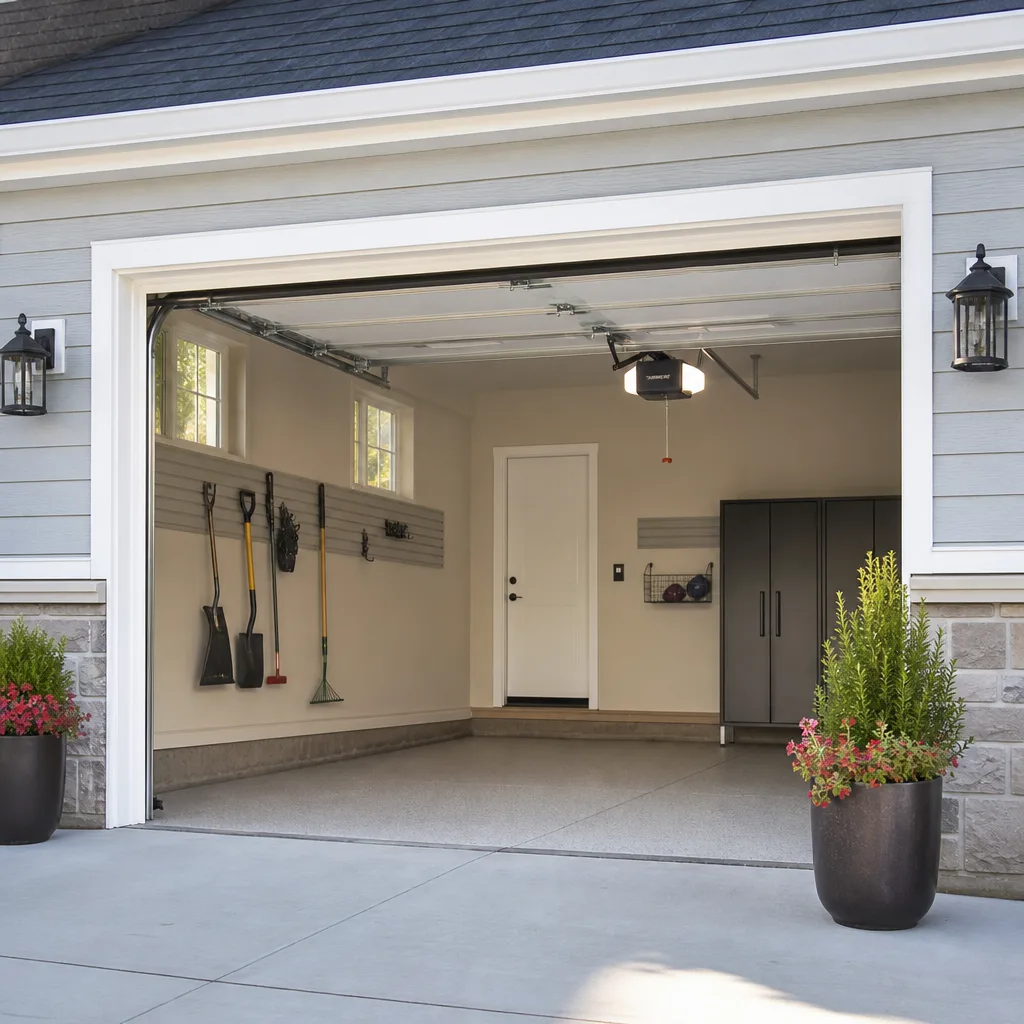
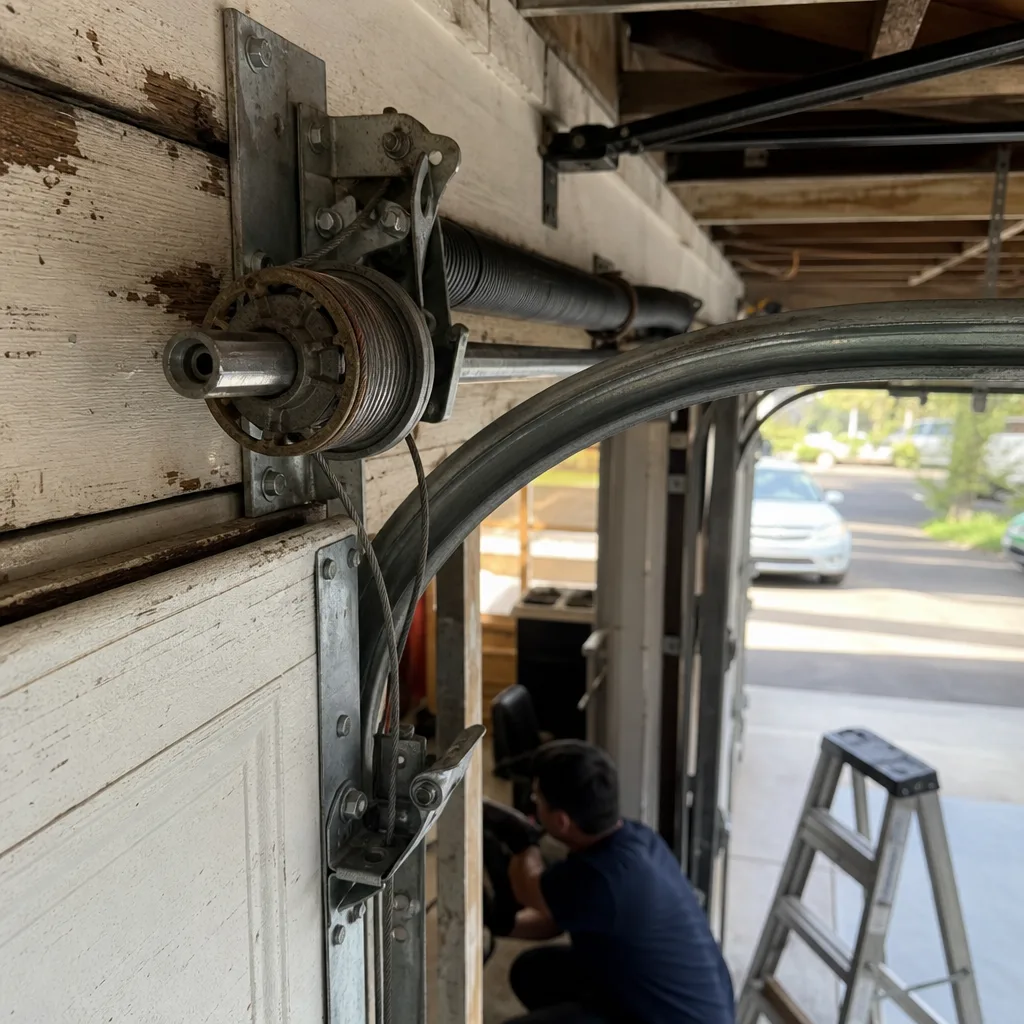 Before
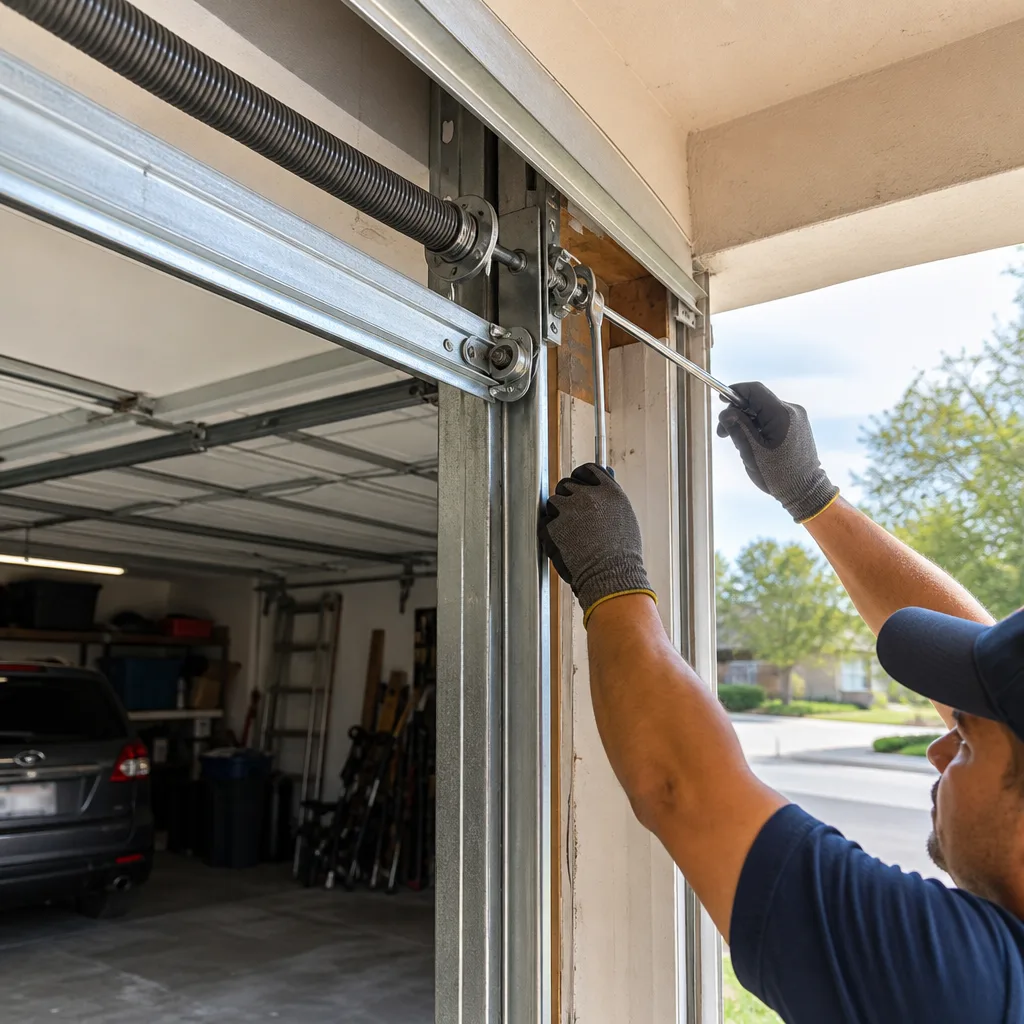 After
After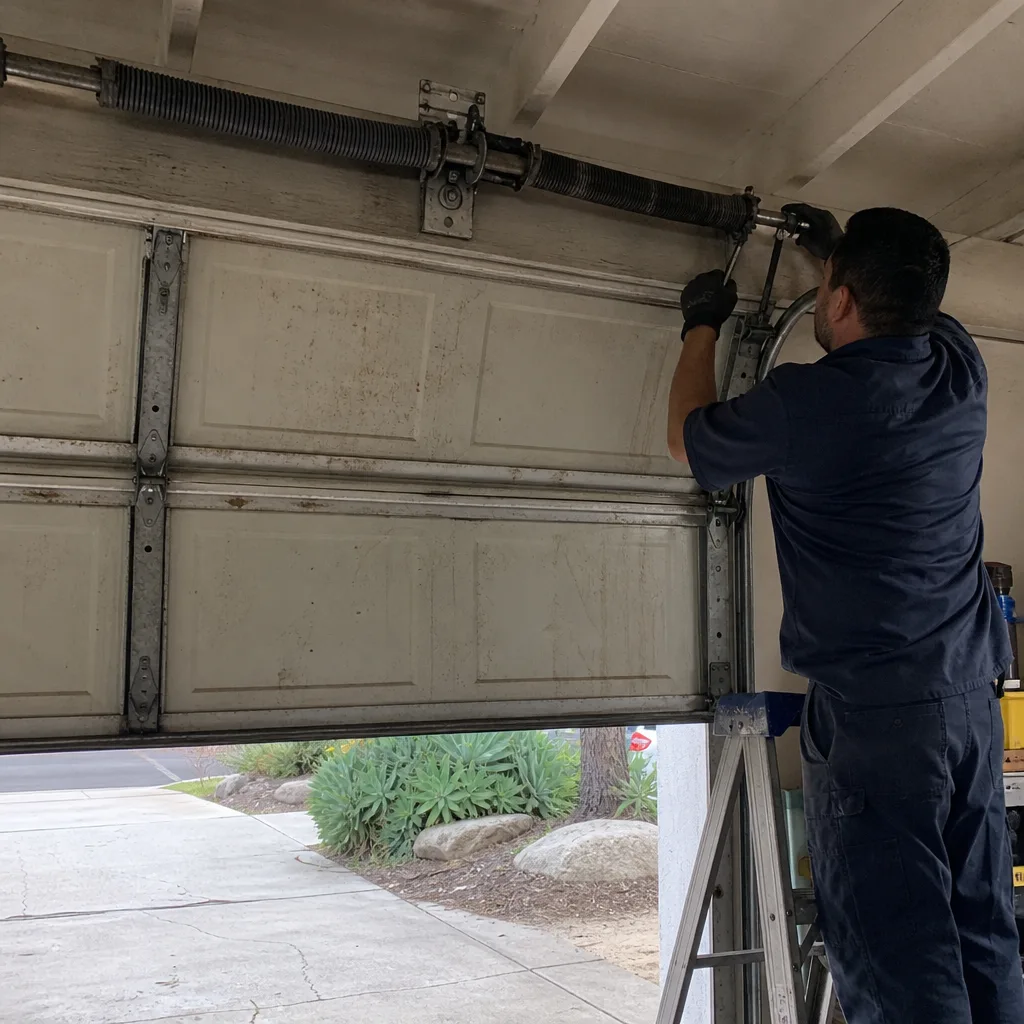 Before
 After
After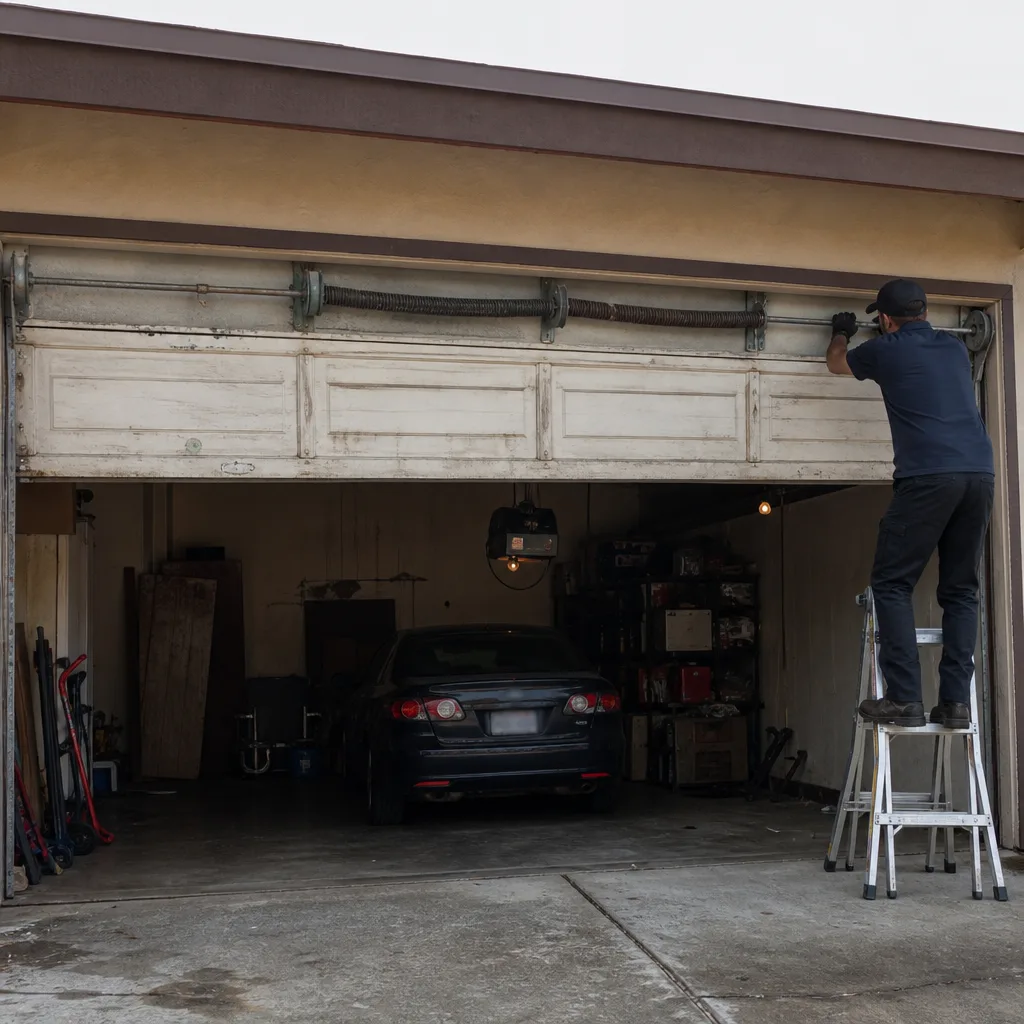 Before
 After
AfterGarage Door Warning Signs: A Poway Homeowner’s Reference Guide
A broken torsion spring rarely snaps without warning. It usually gives you three to five days of a slower-than-normal door, a louder bang at the bottom of travel, and a subtle lean to one side. Most people ignore all three because the door still opens. Then it doesn’t, and the car is trapped inside the garage on a Tuesday morning when you’re already late. This guide and our The Complete Guide to Garage Door in Poway are built around the actual progression of failure, so you can catch these problems at the cheap stage instead of the expensive one. If you live in Poway, where summer heat and canyon dust put real wear on door hardware, you’ll want to know what to listen for before the door stops listening to the opener.
Quick Answer
The most common garage door warning signs are a door that’s slower or louder than it used to be, a visible lean or gap when it’s moving, grinding or squealing noises from the rollers or opener, a door that won’t stay up when you lift it manually, and a cable that’s loose or off the drum. Most of these give you several days of notice before total failure. The one exception is a cable off the drum with the door down, which means stop using the door immediately and call a professional today.
Table of Contents
- Spring Warning Signs: The Timeline From Fine to Snapped
- Cable Warning Signs: The One That Means Stop Now
- Roller Warning Signs: Sound as a Diagnostic Tool
- Opener Warning Signs: When the Motor Is Not the Problem
- Track Warning Signs: The Silent Alignment Killer
- Door Surface Warning Signs: Cosmetic vs. Structural
- The Manual Lift Test: Your Most Reliable Diagnosis
- Common Mistakes to Avoid
- When to Call a Professional
- Frequently Asked Questions
- The Bottom Line
Spring Warning Signs: The Timeline From Fine to Snapped
Torsion springs are the muscle of your garage door. A typical residential door weighs between 150 and 200 pounds, and the springs do most of the lifting. In Poway, where temperatures swing from cool coastal mornings to hot inland afternoons, metal expands and contracts daily. Spring steel fatigues under that cycle, and it doesn’t fail silently. Here’s the progression we’ve seen on hundreds of doors in this area.
Day 1-2: The door feels heavier than it did last month. You’ll notice it most when you lift the door manually after pulling the red release handle. The opener might still move the door fine because it’s compensating, but the springs are losing tension. If the door feels noticeably heavier at mid-height than it did three months ago, the springs are telling you something.
Day 2-4: A louder-than-normal bang at the bottom of travel. This is the spring’s coil binding or slipping slightly as it unwinds. It sounds like a single sharp clank, not the usual thud. Homeowners often rationalize it as “the door settling.” It isn’t settling. It’s the spring losing its grip on the shaft.
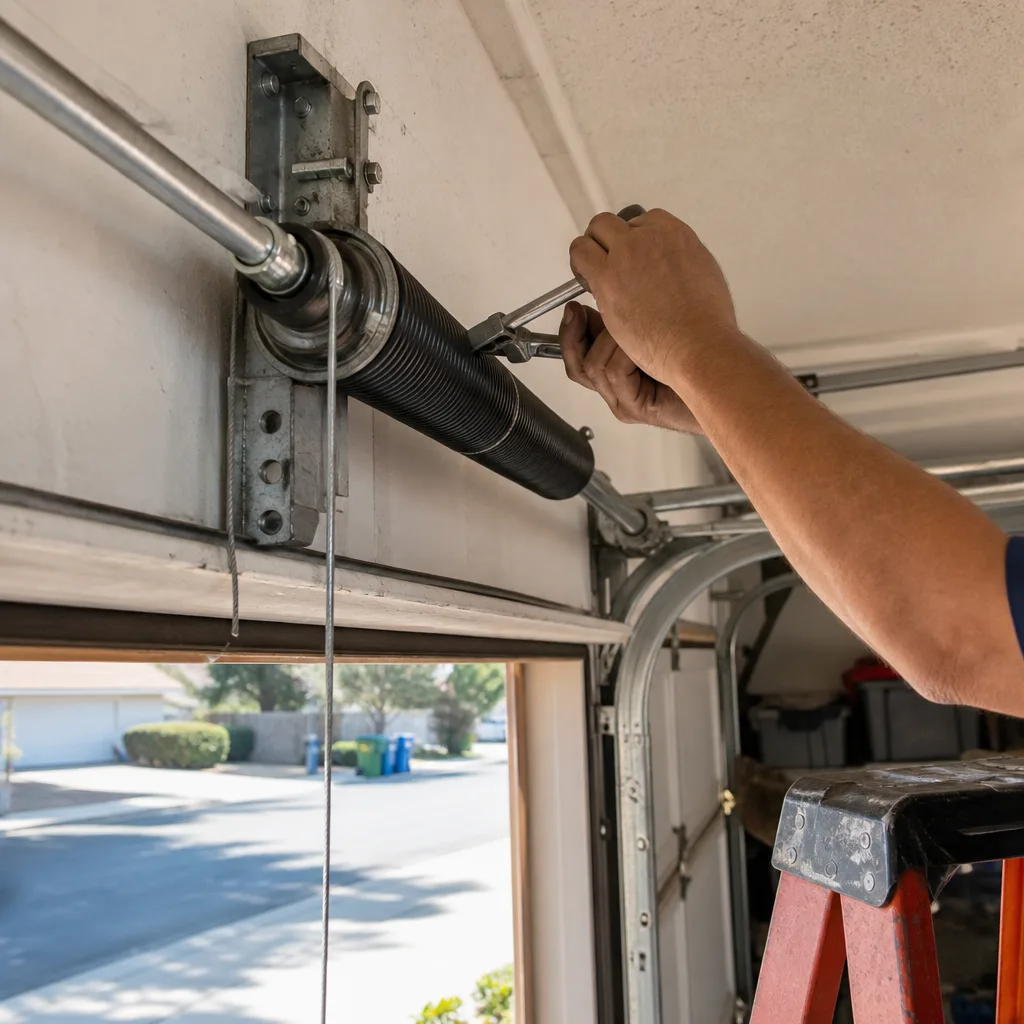
Day 3-5: A visible gap in the spring coil. If you look up at the torsion spring above the closed door and see a space between adjacent coils that wasn’t there before, or if one spring looks longer than the other on a two-spring door, that spring is in active failure. It has already lost tension and is now unwinding unevenly.
Day 5+: The snap. A torsion spring under load releases all at once. It sounds like a gunshot in the garage, and the door will not open without serious effort. If the door is up when it snaps, it can slam down with enough force to damage the door, the opener, or anything underneath it.
We count spring cycles the way you count tire miles. A standard torsion spring is rated for 10,000 cycles, which is roughly seven to nine years of normal use for a Poway household, and our Seasonal Garage Door Care for Poway: Year-Round Homeowner’s Guide can help you track that wear. If your springs are older than that and you’ve noticed the door getting heavier, have them checked before they choose the timing for you.
Cable Warning Signs: The One That Means Stop Now
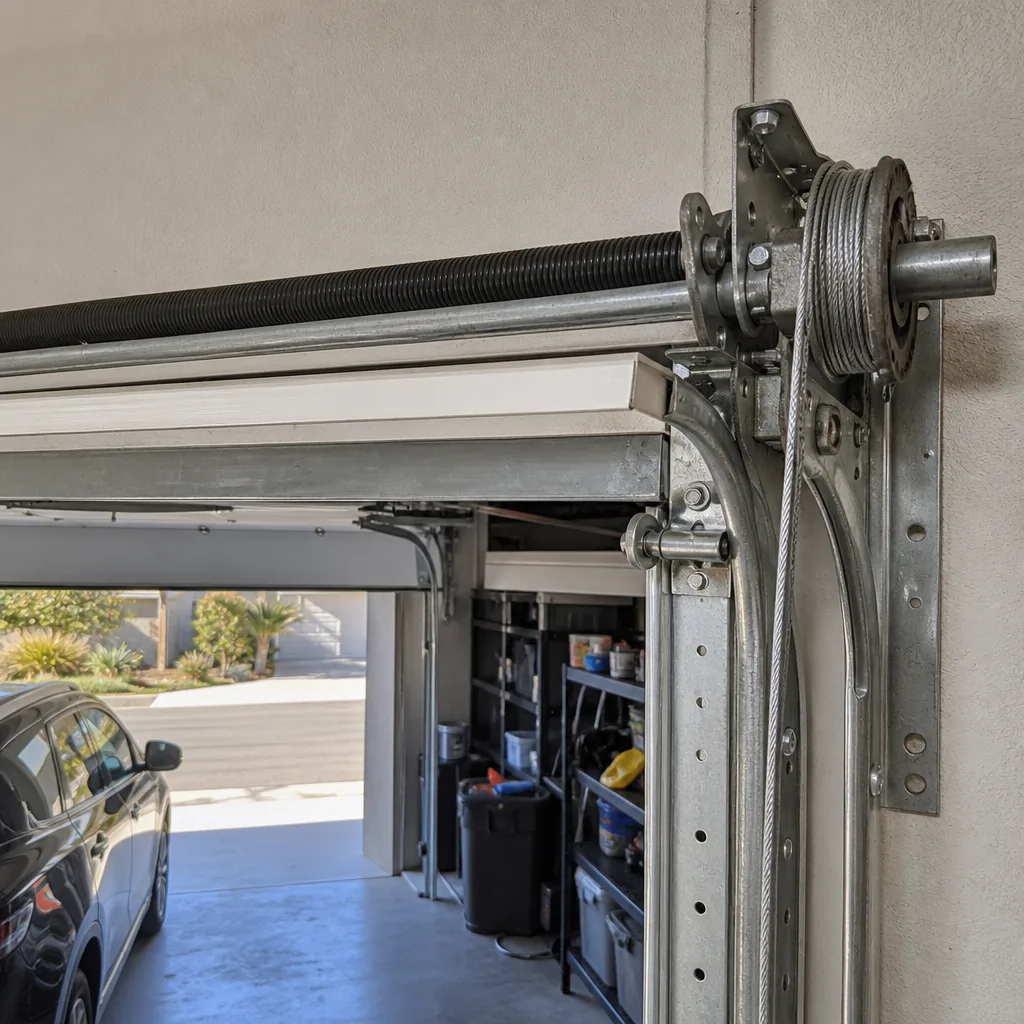
Cables work with the springs. When the spring tension is right, the cables on either side of the door stay tight and evenly wound on their drums. When a spring weakens or breaks, the cable can jump off the drum, and that’s when things get genuinely dangerous.
The stop-now signal: A cable off the drum with the door in the down position. If you see a loose cable hanging beside the track or a cable that’s no longer wrapped around the drum above the door, do not use the door. Do not try to open it with the opener, and do not try to lift it manually. The door is now being held unevenly, and any movement can shift its full weight onto one corner, bending the track, warping the panel, or sending the door off-balance entirely.
In Poway, we see cable problems show up more often on doors that face west and catch the afternoon sun. Heat makes the cable strands expand, and when they cool at night they can develop slack. If the door has been slightly out of balance and the cable has been riding loose on the drum for weeks, it’s only a matter of time before it jumps.
Earlier cable warning signs: frayed strands visible anywhere along the cable length, a cable that sits loosely on the drum when the door is down, or a door that looks slightly lower on one side when closed. Each of these means the cable system is working harder than it should be.
Repairing a cable means re-tensioning the spring system at the same time. The two are inseparable. A fresh cable on a tired spring will fail the same way the last one did, which is why the cable fix is never just a cable fix.
Roller Warning Signs: Sound as a Diagnostic Tool
Rollers are the parts that carry the door up and down the track. They wear differently depending on the material. Steel rollers get noisy and rough. Nylon rollers quiet down but eventually develop flat spots. Both follow a predictable audio timeline.
Early stage: a low rumble or vibration. You’ll hear it most when the door is moving through the curved section of track near the header. The roller is starting to bind instead of spin.
Middle stage: intermittent squealing. One roller catches, then releases, then catches again. The noise comes and goes as the roller passes specific points on the track. This is the sound of a bearing running dry.
Late stage: a grinding sound that doesn’t stop. The roller has seized and is now scraping along the track. This grinds metal against metal and can cut a groove into the track itself.
Here’s the sound-to-location diagnostic that saves you money. If the noise is coming from the top center of the door, it’s the torsion bar or the center bearing. If it’s coming from the side near the track, it’s a roller. If it’s coming from the back of the garage near the ceiling, it’s the opener rail or the chain. If it’s coming from where the opener meets the wall above the door, it’s the header bracket or the J-arm attachment.
Each of those locations points to a completely different fix and a completely different cost. A worn roller set might run a couple hundred dollars replaced. A torn header bracket means opener work. A center bearing means torsion-system work. Knowing where the sound lives gets you an accurate quote before anyone shows up.
Poway’s dry summers mean roller bearings don’t get much help from ambient moisture. Once a bearing dries out, it grinds itself to failure. If your garage door has been in place since before 2010 and still has original steel rollers, they’re past their service life.
Opener Warning Signs: When the Motor Is Not the Problem
The opener is the part that gets blamed for everything, and it’s usually innocent. Openers are simple machines: a motor, a rail, a chain or belt, and a logic board. When an opener is struggling, the first question is whether it’s struggling against something.
Symptom: the opener runs but the door moves slowly or stops partway. This reads as motor failure, but nine times out of ten it’s the door fighting the opener. A tired spring means the opener is doing the lifting the spring should be doing. A door not balanced properly puts double the strain on the motor. The opener isn’t failing; it’s being asked to do two jobs.
Symptom: the opener reverses after hitting the floor. The travel limits have drifted, often because the door’s balance has changed and the opener is reading the sudden resistance as an obstruction. Adjusting the limits without fixing the balance treats the symptom and ignores the cause.
Symptom: the opener makes a grinding noise but the door doesn’t move. The gear inside the opener head is stripped. This is a genuine opener failure, and it happens when the door has been running heavy for months or years. The stripped gear is the last chapter of a story that started with a weakening spring.
Symptom: the wall button works but the remote doesn’t. Logic board or antenna issue, not a mechanical one. Completely different repair path.
We see a lot of Poway homeowners replace an opener when the real problem was a spring, then wonder why the new opener burns out two years later. If the opener is straining, the problem is almost never the opener. Fix the door first, and the opener usually goes back to working like it did when it was new.
Track Warning Signs: The Silent Alignment Killer
Tracks don’t fail suddenly. They drift. A track that’s half an inch out of alignment today becomes a door that binds at the same point every cycle, and that bind puts stress on every other component. Tracks are the silent alignment killer because homeowners rarely look at them.
Visual signs: gaps between the track and the wall brackets, screws that have backed out, or a track that’s bowed inward or outward when you sight down it from the front of the garage. Poway’s dry climate means wood framing can shrink over time, and that tiny shift in the wall translates to the track moving just enough to matter.
Operational signs: the door hesitates at the same point going up or down, the rollers scrape against the inside of the track, or the door makes a popping sound as it passes through the curve. These are all track alignment issues, and they wear out rollers and strain the springs because the door is fighting friction it shouldn’t have.
The bracket check: the vertical tracks should sit snug against the wall with all brackets tight. If you can wiggle the track by hand, that’s a problem. The horizontal tracks above the door should be level and parallel to each other. If one side sags, the door will twist as it travels.
Track repair is usually straightforward when caught early: tighten brackets, reseat the track, check roller clearance. But if the track has been pulling away for months, the rollers can jump the track entirely, and that’s when the door comes off the rails and gets stuck halfway up with a car underneath it.
Door Surface Warning Signs: Cosmetic vs. Structural
Garage doors are big, flat surfaces, and they talk. A bowed panel, a crack running from edge to edge, or a door that no longer sits flush against the frame are all structural signals worth taking seriously in a Poway home.
Cosmetic signs: small dents from a basketball or a bike handle, paint fading from sun exposure, minor scratches, or a few rust spots on steel doors. These don’t affect operation. Fix them when you get around to it, and a coat of paint every few years will protect a steel door from Poway’s UV exposure.
Structural signs: a horizontal bow across the middle of the door, a vertical crack that runs through a panel, a door that bulges outward when the opener starts to lift it, or a door that flexes visibly in the middle when opening. These are signs that the door is carrying weight unevenly, usually because the springs are weak and the opener is pulling from the center instead of the door being lifted evenly at the edges.
Here’s the difference: cosmetic issues don’t change how the door operates. Structural issues do. A cracked panel on a wood door in Poway means moisture has gotten inside and the panel is compromising. A bowed steel door means the load path is wrong and the door is bending under the strain. Both will eventually fail, and the failure won’t be pretty.
Amarr and Wayne Dalton both make steel doors with reinforcing struts designed to prevent bowing, and Clopay’s insulated doors include internal bracing for the same reason. If your door predates those design improvements or is an older Craftsman model, it has less structural reinforcement than what’s standard today.
A door is 200 pounds riding on two springs. Respect it. When the door itself is warping, the frame is the next thing to go.
The Manual Lift Test: Your Most Reliable Diagnosis
This is the single most useful thing you can do to understand the health of your garage door system, and it takes about thirty seconds. It should be done with the door closed and the opener disconnected.
- Pull the red release handle. It hangs from the opener rail, usually near the front of the garage. This disconnects the door from the opener carriage, so you’re lifting the door manually.
- Lift the door to mid-height, about three to four feet off the ground. A correctly balanced door should stay there when you let go. It should feel like it weighs 8 to 10 pounds in your hands, not 150.
- Let go and watch. If the door stays at mid-height, the springs are doing their job. If it drifts down, the springs are weak. If it shoots up, the springs are over-tensioned, which is just as bad in the other direction.
- Lower the door and re-engage the opener. Run the opener until the carriage locks back onto the release mechanism.
In our experience across Poway, about four out of five doors that haven’t been serviced in five years or more fail this test. The owner didn’t know because the opener had been masking the problem. An opener will happily strain against a heavy door until the day it burns out, which is why we recommend this test once or twice a year even when everything seems fine, and suggest checking our more guides & resources for other maintenance tips.
This is also the test we run before quoting any spring work. It tells us exactly how much tension the springs have lost, and that tells us whether we’re looking at a spring replacement or a full door rebalance. If you’re not comfortable pulling the release handle or lifting the door, don’t force it. Some doors are heavy enough that a manual lift test is genuinely hard work, and that’s information in itself.
Common Mistakes to Avoid
- Lubricating to fix a noise. Spraying lubricant on a worn roller or a failing bearing quiets it for a day or two, which just delays the diagnosis. Lubrication is maintenance for healthy rollers, not a cure for worn ones.
- Ignoring a slow door because it still opens. A door that’s gradually getting slower is a door with weakening springs. The opener is compensating, and the compensation ends one day without warning.
- Replacing the opener when the spring is the problem. We see this constantly. The new opener works for a while, then burns out under the same load. Diagnose the door first, then the opener.
- Adjusting travel limits without checking balance. The limits are drifting because the door’s weight is changing. Reset them without fixing the spring, and the problem comes back in a week.
- Using the door after a cable slips off the drum. This is the fastest way to turn a $200 cable fix into a $1,200 door replacement. Stop using the door and call a professional.
- Treating track noise as normal garage door sounds. A properly set up door is surprisingly quiet. A door that clangs, pops, or scrapes is asking for attention, not making conversation.
- Putting off spring replacement because the door still opens. Springs don’t improve with age. A spring that’s lost 20% of its tension will snap eventually, and it will snap when you need the door most.
When to Call a Professional
Some things are safe to watch and wait on. A door that’s slightly slower than last year is a candidate for a seasonal check-up. A roller that squeaks once in a while is worth noting. But a cable off the drum, a visible gap in a spring coil, a door that won’t stay up at mid-height, or a door that’s been hit by a car or a wayward golf cart are all professional territory. Springs and cables are under enormous tension, and the fastest way to a serious injury is a YouTube tutorial on torsion spring replacement. If the badge on the van doesn’t match the name on the invoice, keep looking. Otto’s Garage Door offers free estimates in Poway and we quote the price before the work starts, not after we’ve got the door apart. Call (858) 330-1549 and you’ll get a real person, likely Otto himself, who will tell you what’s wrong and what it costs.
Frequently Asked Questions
Spring replacement in Poway typically runs between $280 and $450 for a standard two-spring torsion system, depending on the door weight and spring cycle rating. We quote the exact price before any work begins and that number doesn’t change when we arrive. Call (858) 330-1549 for a quote on your specific door.
Yes, most spring, cable, and roller repairs are same-day jobs because we carry those parts on the truck. Otto has been answering these calls in Poway since 2004 and he stocks the common springs and rollers for the door brands most common in the area. Call (858) 330-1549 and you’ll know the timeline before you hang up.
No. The price Otto quotes on the phone is the price on the invoice. If the door hides something unexpected, he’ll call you before doing anything and explain what changed and what it costs. You approve the work before we start it, every time.
Yes. Springs are installed in pairs and wear at roughly the same rate. Replacing only the broken spring leaves you with a mismatched system where one side is new and the other is near the end of its life. The door won’t balance correctly, and you’ll be paying for another service call within a year or two. This is standard practice for any reputable garage door company, including ours.
Standard springs last seven to nine years under normal Poway use, which means roughly 10,000 open-and-close cycles. If your door is used more heavily than average, like multiple trips per day, expect the shorter end of that range. High-cycle springs rated for 20,000 or 30,000 cycles are available and cost more upfront but last two to three times as long.
Steel doors with good insulation hold up well in Poway because they resist the dry heat and don’t warp like unsealed wood. Brands like Amarr, Wayne Dalton, and Clopay all build steel doors with reinforcing struts that resist bowing, and Raynor makes a solid mid-range steel door. The brand matters less than the installation and the spring system, which is where the real longevity lives.
It depends on where the grinding is coming from. A seized roller causing grinding from the side is not going to fix itself and will damage the track if ignored, but the door isn’t likely to fail catastrophically. Grinding from the opener head is a stripped gear and the door will stop moving completely, sooner rather than later. If you hear grinding and the door is still opening, call us today rather than waiting for the day it doesn’t. (858) 330-1549, and yes, a real person answers.
The Bottom Line
Garage doors don’t fail without warning. They slow down, get louder, lean, scrape, and grind. The warning signs are there, and most of them give you days or weeks to act before the door stops working entirely. The springs are the heart of the system and they talk first. The cables are the safety net and when they slip, you stop. The rollers, tracks, and opener all have their own language. Learning to listen means catching a spring at the $300 stage instead of the $800 opener-and-door stage. We’ve been fixing doors in Poway since 2004, and the homeowners who call early are the ones who save the most money.
If your door is talking, call it in. Otto’s Garage Door offers Garage Door Repair in Poway with free estimates and upfront pricing. For new doors, see our Garage Door Installation in Poway page. If the opener is the problem, visit our Garage Door Opener in Poway page. And you can always start at the Otto’s Garage Door home page. The name on the van is the name on the invoice, and that name is Otto Reinhardt.
Written by Otto Reinhardt, Owner at Otto’s Garage Door, serving Poway since 2004.